


Parents Grade States on School Choice
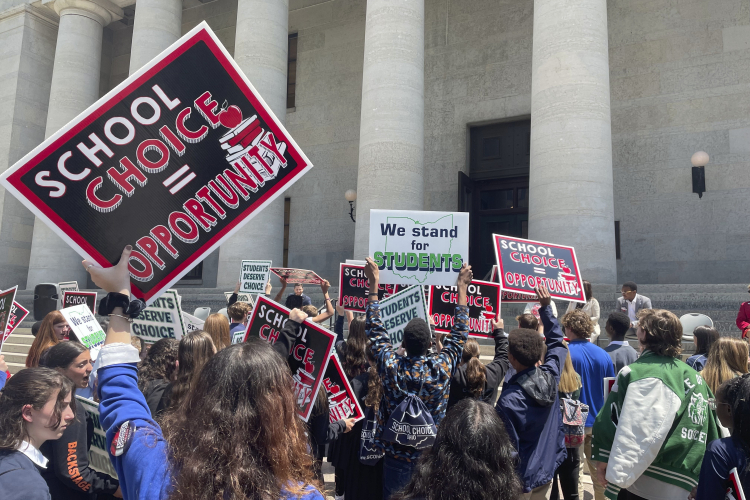
As a parent who has navigated the ever-changing maze of school options, I am well aware that our children’s futures hinge on our ability to properly choose their educational environment. When Parents for School Options recently released a Parent Choice Report Card, which outlines and ranks each state's virtual learning opportunities, I was hit with an unsettling truth: Though some states are making strides in ensuring accessible online education, many continuously impose barriers limiting these opportunities for our children.
States like Colorado and Idaho received an “A,” having set the gold standard through providing full funding, more open enrollment policies, diverse online program selection, and accessible remote testing options. Though from the outside, this looks like a simple investment in technology, it’s an investment in our children’s futures. Our report card also provided As to Arkansas and California, but those states are now considering legislation that will certainly drop their grade next year if they don’t reverse this course. The proposed legislation in Arkansas would close some of the state’s virtual schools, cutting off a critical choice for families and their children, while California’s proposal would unfairly attack all charter schools.
Sadly, other states such as Alaska, Connecticut, Mississippi, and New York, just to name a few, have very restrictive policies that stymie a family’s desire to choose an online school that best fits their child — trapping that child in a traditional failing public school.
The overwhelming benefits of a flexible online learning environment are transformative for many families. At times, it can work as the best and only option. The empowerment students feel when prompted to learn at their own pace is profound. It also allows them to pursue subjects not offered by most schools and provides a haven for those experiencing bullying and/or other challenges seen in conventional classrooms.
Yet, the report card found overly restrictive enrollment criteria and limited state funding repeatedly place unnecessary hurdles in front of our children in pursuing an online education. Fundamentally, the Parent Report Card evaluates states in key policy and performance metrics: equitable funding, open enrollment, variety of virtual options, enrollment capacities, and access to remote proctored testing. These are more than simple administrative details. They’re the building blocks of an educational system.
When virtual schools receive full funding from the state, they have the means to offer robust academic programs, advanced technologies, and more personalized support. On the other hand, programs with inadequate funding can render them struggling, diminishing the quality of education received by students enrolled.
Open enrollment is yet another critical piece of the puzzle. The power of school selection should not be dictated by geographical boundaries or outdated policies. Yet, in many parts of the country, enrollment caps, in unison with very strict criteria, force families into proximity-based decisions, as opposed to the best option for their family. This is unacceptable. Every parent should have the right to send their child to the school that meets their academic, social, and emotional needs — without the needless, restrictive red tape.
To help all of America’s children reach their full educational potential, we must challenge policymakers to re-examine the laws governing virtual learning. We need to see an end to the bureaucratic obstructions making online education difficult. When given the tools to choose the proper educational path, our children thrive and become more informed, capable citizens.
As a mother of two virtual learners, I have seen the transformative power of school choice firsthand. Now, more than ever, we must expand access to quality online education. Together, we must ensure funding is equitable, enrollment processes are fair and that our children have a truly diverse range of options when it comes to online education.
Our children deserve nothing short of an educational environment that supports their growth, nurtures their talents, and prepares them for a lifetime of success. It's time for every state to get to work on this and earn an A on their next report card.
