


Antisemitism Has a Campus Problem
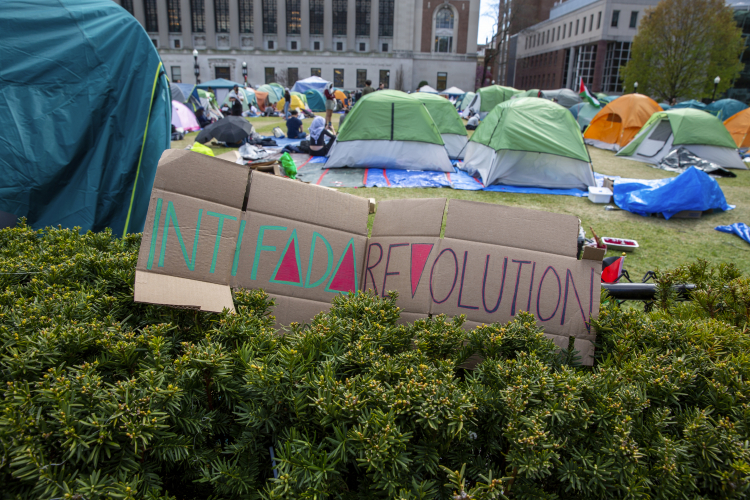
University campuses have been at the forefront of the country’s ongoing discussions around antisemitism in the aftermath of the October 7th attacks and Israel’s war in Gaza.
Over the past few months, campuses across the United States have been replete with antisemitism. Earlier this month, a suspect was charged with attempting to set fire to San Francisco Hillel, which serves Jewish students at several nearby universities, including California State University. Meanwhile, towards the beginning of 2025, the U.S. Department of Justice officials visited 10 universities, including Harvard, Columbia, New York University, and Johns Hopkins University, in response to documented incidents of antisemitism earlier this year.
As the founding Director of Data and Analytics at StandWithUs, an international non-partisan, non-profit organization dedicated to combating antisemitism and Israel education, these events have provided resolve for our efforts to provide evidence-based, peer-reviewed research on antisemitism trends.
Our latest research on campus antisemitism across North America reveals what administrators are not brave enough to admit: antisemitism has a campus problem. The threat of campus-based antisemitism is systematic, escalating, and the dangerous radicalization of an entire generation.
Our research polled a total of 159 student leaders across North America, with roughly 89% identifying as Jewish. The remaining 8% identified as Christian. Seventy-two percent of these students have experienced antisemitic incidents, and 82% of these students say that they witnessed an antisemitic incident.
Verbal abuse was the most common form of these experiences. Seventy-eight percent of students say that they’ve heard phrases like, "Oink oink piggy piggy, we're going to make your lives sh*tty” to “G-d sent Hitler to help Jews reach the promised land” or even “dirty Jew” while shaking coins at them.
One student reported that another student told all of his friends not to communicate with a Jewish student because she was a “Zionist”. In response to this, the professor brought the entire class to a mandated show for a class that was biased against Israel.
These hurtful words don’t stop at the campus facilities either. Nearly 60% of respondents experienced doxxing campaigns where personal information was shared online to incite targeting, similar to the 2024 doxxing campaign perpetuated against Jewish and pro-Israel students at Penn State.
Meanwhile, nearly half of our survey participants reported witnessing vandalism of university property with hateful and antisemitic messaging. Some common phrases included “Globalize the intifada”, “Zionists can suck my balls,” and “Death to Israel”.
Not only are events such as these detrimental to the learning environment for all students, but they also carry a steep price tag. In 2024, the University of California System spent roughly $400,000 on graffiti cleanup in the aftermath of student encampments and protests surrounding the Israel-Hamas War.
Fortunately, physical violence accounted for the lowest share of incidents in our study. Nearly 20% of our respondents reported witnessing physical violence, which include physical assaults, forcibly removing Magen David, or Jewish Star of David, necklaces from students' necks, and blocking or chasing Jewish students across campus as they move between classes.
Our research shows that an overwhelming majority – 93% to be exact – of these incidents occur at the hands of students, but there’s enough blame for faculty and administrators to go around.
Twenty-nine percent of these incidents involved faculty, with roughly 14% involving teaching assistants and nearly 10% involving administrators. These incidents range from an international relations professor falsely claiming that “the Holocaust was the Jews' fault because they retaliated once being released from the concentration camps and killed the entire population of Poland and Germany” to an administrator responding to a student’s concerns with “This may sound harsh, but this is what activism looks like today."
All of this data shows that Jewish students and their allies are increasingly being faced with a stark choice: hide your identity or accept hostility and isolation. We're teaching Jewish students that their safety requires self-segregation, their identity is a liability, and that institutions will not protect them. We're teaching non-Jewish students that antisemitism carries no consequences, that intimidating Jewish peers is acceptable.
The retreat we're documenting—from campus life into Jewish-only spaces, from open expression into strategic concealment—has consequences extending far beyond college.
It's time for university leaders to recognize this crisis, to show leadership, and to act accordingly.
