


The 'Ban' on Plato at Texas A&M Was a Set Up
Texas A&M philosophy professor Martin Peterson recently drew national attention when his Contemporary Moral Issues syllabus was flagged by Texas A&M for including racial and gender ideology. Syllabus review was mandated in November 2025 when the Texas A&M Board of Regents voted to revise university policy and require professors teaching about racial and gender ideology to get pre-approval. Peterson, in an act of malicious compliance, tweaked an earlier version of his syllabus to portray himself as an offender of this policy. When his stunt managed to get his syllabus flagged and his course content censored, he portrayed the university’s request as a breach of his academic freedom and First Amendment rights. In reality, Peterson misused his academic freedom to provoke the university into a public spectacle.
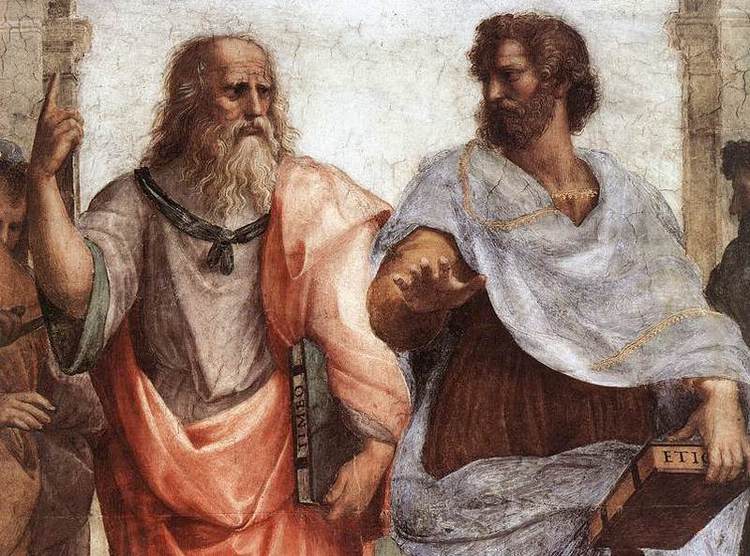
Peterson’s case has drawn sympathetic reactions from many corners because the university banned excerpts from Plato’s Symposium, which, allegedly, contain content related to racial and gender ideology. Philosophy department chair, Kristi Sweet, told Peterson via email to remove the units on racial and gender ideology as well as the reading from Plato’s Symposium from his syllabus. Peterson replaced the units on race and gender ideology with units on free speech and academic freedom. The assigned reading for these new units is The New York Times article about his case. Was this shameless self-promotion, or critical engagement with a real-world issue?
Unfortunately for Peterson, the syllabus he used in a Fall 2024 version of Contemporary Moral Issues is available online. When one compares the old version of the syllabi to the new version, we find that the units are the same and the readings are almost identical. Peterson simply renamed his unit on “Race and Gender Issues” as “Race and Gender Ideology 1 and 2.” In other words, Peterson didn’t change what he was assigning students to read; he simply labeled it something else. Moreover, he chose to label it something that he knew the system would flag in light of the new Board of Regents policy. According to Peterson, he was “merely trying to ensure that the syllabus is current.” Instead, he’s managed to make academic freedom a laughable concept.
Much has been made of the supposed censorship of the passages from Plato’s Symposium. These excerpts were not included in the version of the class taught in Fall 2024. According to Peterson, “last time I relied entirely on the primary readings in the textbook, which I did not like.” The Symposium text was added, supposedly, because Peterson was looking for a different view of race and gender than those found in contemporary ethics textbooks. Peterson’s syllabus, however, does not include the passages on the class schedule. This is significant because they are not connected to a unit the way all the other class readings are. Considering that the readings were not assigned to any unit, arguing that the readings are being “censored” seems like an overstatement.
If Peterson cared about the ethics of free speech and academic freedom, he could have assigned excerpts from Book X of Plato’s Republic, where Plato famously talks about censoring the poets. As I noted earlier, Peterson replaced the race and gender ideology readings and the excerpts from Symposium with a New York Times article about his case. One would think the complete removal of race and gender issues from an ethics syllabus would be criticized, but the social justice crowd has been silent. All of this is magnified because Peterson serves as chair of Texas A&M’s academic freedom council. When the chair of the academic freedom council uses their academic freedom in bad faith, other academics should call this out. The absence of dissent is deafening.
Academic freedom is important, and it deserves to be protected. For this reason, we must distinguish genuine threats to academic freedom from academic theatre. Five minutes of tinkering with an old syllabus to use intentionally inflammatory language is not an exercise of academic freedom. It’s just dishonesty. Plato famously reproached the Sophists for manipulating language to make the weaker argument seem stronger. When one considers the facts, one cannot escape the conclusion that Peterson is a sophist himself.
