


Innovate Where It Counts: A Smarter Path for ESAs
Innovation, to be meaningful, has to solve the right problems. For decades in American education, we’ve chased pedagogical fads and reinvented the classroom over and over again, often while ignoring robust research on how kids learn best. Far from a call to halt innovation, we must redirect it where it truly matters. As Education Savings Accounts (ESAs) rapidly expand across the country, the stakes of getting this right have never been higher.
There are often calls to innovate in education. But we don’t need to “innovate” the foundations of learning.
We have strong evidence about what works. The research on reading, for instance, is overwhelming. Decades of findings from the National Reading Panel show that systematic phonics is superior to whole-word guessing games, a conclusion reinforced by later studies. Similarly, there is a strong case to be made that a time-tested, knowledge-rich classical curriculum is more effective than failed experiments like Common Core, which did not deliver the promised gains in student learning as documented by an analysis from Brookings. And a broad liberal arts education builds range in students, not premature specialization.
Building on a well-cured, firm foundation is the only way forward.
The real question is where we should focus our energy. The true frontier for innovation isn’t in what we teach, but in how we support the entire educational ecosystem. Innovative educators, school founders (or “education entrepreneurs,” as I call them), and families nationwide are building models that better serve students. This is my passion: supporting and accelerating these committed builders and the students who benefit from their dedication.
There are far more resources available today than when I founded my first hybrid school two decades ago. Classical, knowledge-rich curriculum models exist on innovative platforms like the one Excelara designed to help schools launch and grow sustainably. These tools make it possible to expand access without sacrificing quality or mission.
Meaningful innovation empowers teachers with tools and insight that free them from routine tasks and allow them to focus on the essential work of teaching. It’s also about enabling parents with both access and choices that equip them with the tools to truly partner in their child’s education. And true innovation meets students where they are, using technology and AI not as a gimmick or shortcut, but to provide personalized support and challenges that allow them to dig deeper, build confidence, and connect learning to their passions.
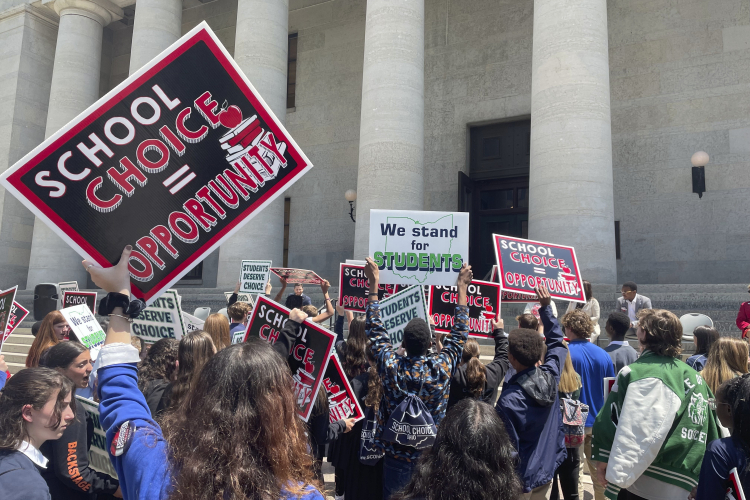
This is the innovation that we need. And the school choice movement, especially the rise of ESAs, like the explosive rollout of the new ESA program in Texas, is the catalyst we need to unleash it. By funding students directly, ESAs create the demand for these new and better tools. They also preserve the freedom for families to choose schools aligned with their values, including faith-based models that have long served communities across the country.
But this promise is in peril from two primary threats.
First, well-meaning but misguided regulations can kill new models before they even start. Requiring full accreditation before a school can receive ESA funds creates an impossible barrier for startups. Accreditation is a lengthy and costly process that often takes three to seven years.
An analysis of eight states with universal school choice programs found that in states without this requirement, 84-100% of private schools participate, while in states that mandate full accreditation, like Arkansas, Indiana, and Iowa, that number plummets to 44-63%. This effectively cuts participation in half, limiting families’ access to new and emerging models.
The answer isn’t to eliminate standards; we just need to get smarter about them. One solution is provisional accreditation. Reputable organizations can walk alongside new schools from day one, providing oversight and accountability. This allows new school models to access ESA funds while they work toward full accreditation, an approach already being piloted through new microschool accreditation pathways by groups like the Middle States Association.
Second, we have to make sure the disaster of college tuition inflation doesn’t repeat itself in K-12. Federal student aid programs, including Pell Grants, clearly contributed to making higher education ridiculously expensive. The “Bennett Hypothesis” way back in 1987 warned this would happen, and the data proves it. A New York Federal Reserve study found that for every new dollar in subsidized loans, universities raised tuition by about 60 cents.
A similar outcome will materialize in K-12 education if vigilance is not maintained. The cost of a private or alternative education could simply rise to meet the maximum ESA amount.
This would kill innovation in cost-cutting and hurt the very families school choice is meant to help.
K-12 education isn’t cheap or easy, but it can be done exceptionally well for a fraction of today’s private school costs. Let’s build on the foundation of what works and start innovating where it counts. Let’s expand school choice wisely, with smart regulations that encourage new schools and guard against the cost inflation that has run rampant in higher education.
If we fail to protect affordability and room for new models now, we will lose both. The future of our children depends on what we choose to safeguard today.
