


What We Can Learn from Girls’ Sports
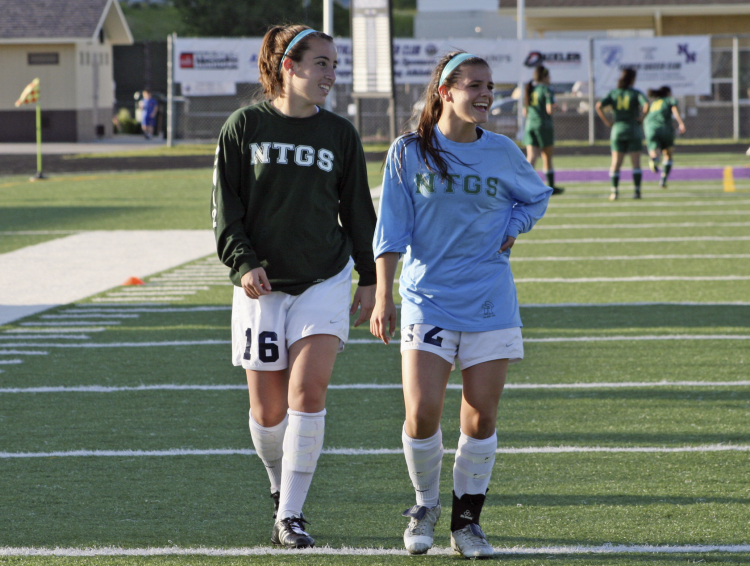
In an era of performance and spectacle, girls’ sports still teach formation, leadership, and joy.
I watch a lot of basketball.
I watch the college game closely. I watch the pros. I know what elite athletic performance looks like - the speed, the spacing, the spectacle.
But this week, sitting in a girls’ high school gym, I saw something that surprised me.
It wasn’t just that the game was good. It was that it felt pure - intense without being cynical, competitive without being performative, serious without being self-conscious. The girls played with focus and joy. They coached one another on the floor. They fought for rebounds. They moved as a team.
And what struck me most was this: what I was watching was not merely sport. It was formation.
What moved me was not simply the quality of play, though it was high. It was the atmosphere: a gym full of young women entirely absorbed in the task before them - striving, laughing, encouraging, competing with real seriousness. No irony. No self-display. Just excellence unfolding in community.
In a culture that so often teaches girls to perform, here was a place where they could simply be and be authentic, strong, focused, and fully alive.
In our era, adolescence has become saturated with performance. Social media trains young people to see themselves from the outside first: as an image, a brand, a posture. Even achievement can become a kind of anxious self-display. Young people learn early that they are always being watched, interpreted, and ranked.
But in an all-girls environment, something shifts. The usual pressures of adolescence do not vanish, but the constant sense of being evaluated through an external gaze recedes. Girls are freer to compete, to speak, to lead, to fail, to try again.
They are not auditioning. They are becoming.
This is one of the least discussed virtues of girls’ education, and of girls’ sports in particular. A great girls’ basketball game is not a “version” of the boys’ game. It is its own kind of moral education.
Athletics teaches habits that no classroom lecture or intensive seminar can fully supply: discipline, resilience, cooperation, and courage under pressure. It teaches how to lose without collapse and how to win without arrogance. It demands effort not as a performance, but as a commitment to something larger than the self.
In other words, it teaches character.
That is not incidental. It is central. And it is increasingly countercultural.
So much of American schooling often speaks fluently about achievement - grades, outcomes, résumés, the next credential. But what young people need just as much is formation; what Aristotle called the cultivation of virtue through habit — the slow development of confidence, responsibility, self-command, and community.
Girls’ schools at their best still understand this.
They normalize female leadership. The captain is a girl. The leaders on the floor are young women learning, in real time, how to direct others, how to communicate under pressure, and how to carry responsibility. Authority is not a novelty. It is not something to apologize for or perform.
It is simply expected, and that matters. It means that leadership becomes less about posture and more about competence. Less about optics and more about responsibility. And it means that girls learn to inhabit excellence without constant self-consciousness.
So much of modern adolescence is filtered through a lens of surveillance - social, emotional, digital. Young women in particular are asked to excel while also managing an exhausting secondary task: how they are perceived while excelling. The result is often anxiety disguised as achievement.
In a healthier environment, ambition looks different. It is not brittle. It is not theatrical — not the kind of constant self-presentation Erving Goffman described. It is communal, embodied, disciplined. It is rooted in effort, not in branding.
That is what I saw in that gym.
This is why girls’ schools matter. They are not relics. They are not retreats from the real world. In reality, they are training grounds for it - places where young women learn early that they need not shrink, apologize, or audition for space.
They learn that friendship and excellence can coexist. That seriousness and joy are not opposites. That competition can be honorable, not cruel. That leadership can be steady, not performative.
In other words, these schools cultivate a rare kind of wholeness.
And there is a civic dimension here, too. Democracies do not run on credentials alone. As John Dewey insisted, democracy is not merely a system but a way of life - dependent on citizens who can cooperate, speak clearly, disagree without collapse, lead without domination, and endure pressure without losing themselves.
Sport, at its best, is not extracurricular. It is educational in the deepest sense. It forms habits of perseverance, teamwork, humility, and courage.
We debate test scores and curricula endlessly. We argue about politics in the classroom. We chase innovation and technology. But we rarely ask the most basic question: what kind of person is this institution helping a young human being become?
The best schools - whether public or private, religious or secular, single-sex or coeducational - are those that answer that question honestly. They understand that education is not merely information transfer. It is moral and civic formation.
Girls’ schools, at their best, remind us of what is possible when young women are given the space to grow into themselves: not through slogans, not through performance, but through discipline, friendship, excellence, and joy.
In a culture increasingly defined by spectacle, that kind of seriousness is not old-fashioned.
It is rare. It is precious.
We should celebrate these institutions and learn from what they still understand: that education is not only about achievement, but about becoming.
