


Trump’s Higher Education Legacy May Be Accountability—Whether He Meant It or Not
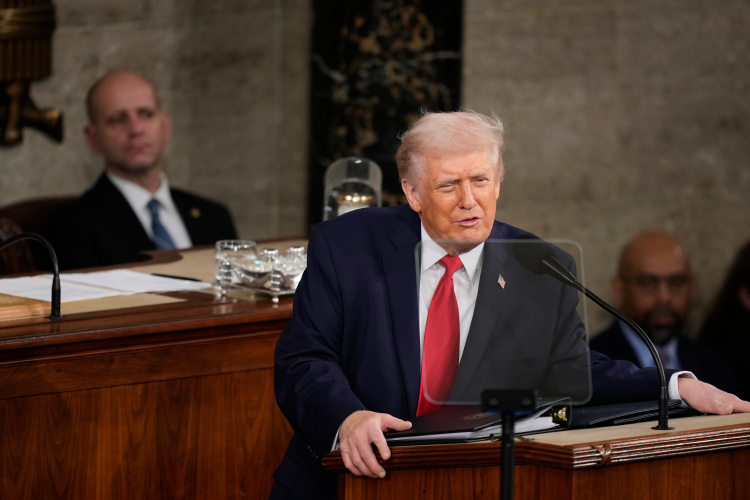
If history judges Donald Trump’s impact on higher education by headlines alone, the story will center on conflict. His administration’s relationship with colleges and universities has been defined by public fights, funding threats, and direct negotiations aimed at eliminating DEI initiatives, elevating conservative voices on campus, and pushing institutions to align more closely with a particular political and cultural vision.
Supporters see these moves as overdue corrections. Critics see them as political intrusions into academic independence. But either way, these efforts share a common feature: they attempt to change higher education through direct pressure on institutions, rather than through incentives that encourage colleges to innovate on their own terms.
Ironically, Trump’s most lasting higher education legacy may prove to be something entirely different—and something he did not personally drive. It may be the introduction of serious, outcomes-based accountability for colleges through the budget reconciliation legislation known as the “One Big Beautiful Bill” (OBBB) or the Working Families Tax Cuts, which he ultimately signed into law.
And that reform rests not on partisan confrontation, but on two decades of bipartisan thinking about how to ensure colleges deliver real value to students.
The idea that institutions should be judged in part by student outcomes did not originate with this administration, or even this decade. One of the earliest public calls for reform appeared in 2006, when the Commission on the Future of Higher Education, chaired by then-Education Secretary Margaret Spellings, issued a landmark report calling for greater transparency and accountability in higher education. Tuition was rising, borrowing was growing, and yet consumers lacked basic data about graduation rates, debt, and post-college earnings.
The intellectual roots of the push for accountability stretch even further back to Lamar Alexander’s leadership at the Department of Education. While concrete changes were limited at the time, Alexander later carried these themes into Congress, repeatedly emphasizing that federal student aid programs needed stronger connections to student outcomes.
The next major step forward came under the Obama administration. After trying and failing implement a college rating system, the administration created a College Scorecard, which provided data about graduation rates, typical debt loads, and post-enrollment earnings across institutions and programs. The administration went further with “gainful employment” regulations, which put programs that consistently left students with high debt and low earnings at risk of losing access to federal funding.
But these regulations were not applied universally. In fact, they applied only to a relatively small number of programs. Without Congressional authorization, the administration was forced to rely on its narrow executive authority and could only apply its rules to programs explicitly designed for career preparation. Because the regulations disproportionately affected the for-profit sector, they became associated with partisan battles rather than a neutral effort to protect students.
The regulations were largely sidelined during the first Trump administration. And while the Biden administration later revived versions of gainful employment, the administration’s focus on student debt cancellation distracted from efforts to enact meaningful accountability reform.
That is what makes Trump’s OBBB so striking. After years in which accountability reforms stalled or became politically polarized, the next significant step forward came from a Republican-controlled Congress, in partisan legislation, signed by a Republican president.
For the first time, universal, outcomes-based accountability standards were written directly into statute through the introduction of a “do no harm” economic standard for programs receiving federal student aid.
Before this change, the primary gatekeepers of federal student aid were accreditors—private bodies that offer judgments about institutional quality through largely subjective processes. Beyond that, federal funds were only cut if student borrowers defaulted on loans at extremely high rates.
Even that weak measure became increasingly meaningless with the rise of income-driven repayment options. Under this regime, default rates fell, but only because the rules allowed borrowers with low earnings avoid default even if they made little or no progress repaying their loans. Colleges could leave most of their students saddled in debt they were too poor to repay without facing any financial consequences.
The new “do no harm” standard changes the conversation. Programs must now demonstrate that students are not left financially worse off than they likely would have been without enrolling. It does not require programs to create wealth or dramatically boost earnings. It merely demands that institutions not leave students harmed by their educational investment.
At first glance, this is an astonishingly low bar. We should hope that higher education at least does no harm. But as a policy starting point, it is both practical and defensible. Institutions may object to new expectations, but it is difficult to argue that programs should continue receiving taxpayer dollars if their graduates consistently end up worse off than if they had never enrolled.
In that sense, OBBB represents both a major and a modest step. Major, because it fundamentally changes the framework for federal higher education funding by introducing real accountability. Modest, because the expectations it imposes remain minimal.
And that combination may prove politically and practically brilliant. By setting a low but meaningful threshold, lawmakers give institutions time to adjust while allowing data and measurement systems to improve. The policy builds a foundation for a future accountability regime that can evolve as tools improve, gradually raising expectations for student outcomes.
The result is a framework that encourages institutions to innovate and improve rather than merely comply. Colleges remain free to pursue their missions in their own ways, but they now face incentives to ensure students truly benefit.
Trump’s higher education legacy will likely be debated in terms of culture wars and campus politics. But his quieter legacy may matter more. By signing legislation that embeds outcomes-based accountability into federal law, his administration might have helped cement a long-time bipartisan effort to ensure colleges deliver real value to students.
In the end, the most durable reform may not be about remaking universities in any political image, but about insisting they keep their promises to the students they serve.
