


What Happens if You Take Away the Principal’s Phone?
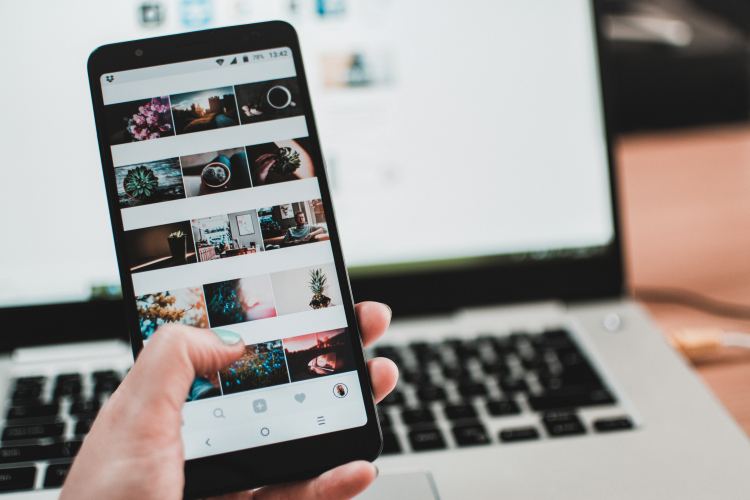
While writing this sentence, my iPhone buzzed three times: a picture of my two-year-old shooting a basketball, a reminder from my wife to pick up oranges from Publix, and an email from a teacher who went home sick. Each notification made the same noise and evoked the same response from me. My phone doesn’t discriminate. Research from the University of California, Irvine tells me that each disruption led to a roughly 20-minute interlude where I struggled to regain focus. I’ve known about this study for years, but I’m still an hour behind schedule.
Earlier that day, I followed school policy and took a student’s phone when it fell from his backpack at the start of class. You can’t miss the irony. I’ve often wondered what would happen if someone took my phone away. For the month of February, we’re giving it a try.
I lead Atlanta Classical Academy, a K-12 charter school in Georgia, and since our founding in 2014, we’ve run a phone-free campus from our conviction that education begins with sustained attention, and we’re responsible for protecting it.
Two years ago, our upper school counselor launched an initiative called February Freeze, a voluntary, month-long challenge where students quit social media, limit screen time to an hour a day, and cut all technology after 8 PM. On average, about 60% of our middle school students have taken on all three challenges, with another 15% committing to at least one of these restrictions. 77% of our high schoolers opted into the Freeze in some capacity.
For this school year, we’re challenging our faculty and staff to follow suit. But what happens when your principal can only use his phone for an hour a day?
In the past few years, Jonathan Haidt has led an effective crusade to get phones out of schools across the country, and the progress is hopeful. The trouble is that we’ve spent the last decade rewiring our model of education, our habits of communication, and our grading practices around the premise that everyone has a device all the time. And while we’ve given attention to the effect cell phones have on students, we’ve overlooked the adults.
Last spring, I emailed Johann Hari, a British journalist and author of Stolen Focus, who writes about how tech companies leverage the wisdom of psychologists and behavioral economists to keep us tied to our devices. I wanted to interview him as part of kicking off this initiative and received this response: “Hello! I am currently in rural Jamaica and away from my phone and laptop, to both decompress and recharge. Until March 2026, I will only be checking my email once a week.”
We pivoted to Andy Crouch, author of The Techwise Family, and received another auto-reply: “I’m traveling with my family in Asia and am working on being totally present. I won’t be checking my email.”
I found both responses quietly annoying, but they introduce an obvious challenge to convincing adults to surrender their phones for a month: if you’re not a professional luddite, you risk being unprofessional.
At Atlanta Classical, we encourage our faculty to develop deep subject matter expertise and cultivate a love of their discipline that allows instruction to begin in wonder instead of definition and dissection. We aim to treat teachers as intellectuals instead of technicians and believe that the job requires space for a person to read and think, uninterrupted, for consecutive hours.
The approach is reinforced by studies like the Infomania experiment from Hewlett-Packard, where researchers tested employees’ cognitive capacities in a quiet environment versus one where incoming emails interrupted their work. The results showed unequivocally that the regular cacophony of notifications significantly impaired performance on par with recreational drug use.
But then I receive a parent email that requires the attention of multiple teachers, and I feel the urge for a professional (read immediate) response. When I don’t hear from teachers instantly, I begin to interpret their silence as willful disregard for the good of the institution. I certainly wouldn’t accept an automated message informing me that they’re not responding to email because they’re lost in their analysis of Brothers Karamazov.
The underlying premise for my frustration is that speedy communication is the highest good, and a school should reconfigure itself to facilitate this. It’s common sense that it’s better to respond to a parent’s concern about their child’s English grade within 24 hours instead of one week. But what about 12 hours instead of 24? 6 instead of 12? Eventually, you have to wonder what teachers are not doing when they’re spending hours carefully crafting responses to parent emails.
Setting aside legitimate concerns about school safety for which there are special technologies that can override any “do not disturb” mode, we have to reckon with the consequences of the principal or teacher who instinctively reaches for his phone every minute for fear she’s missed a critical message. Most veteran teachers will tell you that the richest moments with students often hide in the 2-3 minutes directly following a class as a young person mulls over the day’s conversation and approaches the lectern with a follow-up question.
We should speculate about how many of these conversations have been missed because our phones vibrated a dozen times during class and stole our attention the moment the bell rang.
The simple reality, however, is that we won’t put our phones down unless we give each other permission. This was Jonathon Haidt’s key insight in an Anxious Generation. Change requires collective action because doing this independently could amount to a confession that you’re simply unnecessary. It might also get you fired because your work would slow.
There’s a famous story from Plato’s “Phaedrus” where Socrates narrates a conversation between Thamus, a mythical Egyptian king, and Theuth, a god celebrated for his clever inventions. Their discussion concerns Theuth’s invention of writing, which he claims will make their citizens wiser and improve their memories. The king responds that “the parent or inventor of an art is not always the best judge of [its] utility.” Neil Postman argued that “embedded in every tool is an ideological bias, a predisposition to construct the world as one thing rather than another.”
Because of the February Freeze, our school is now asking about the world we construct for our students and families when we prioritize immediate access and complete connectivity at the cost of attention.
We congratulate ourselves for telling a 12-year-old girl that she’s allowed to leave a message unread for a full school day, but do we have the courage to follow suit? Schools may get rid of phones, but in most of the important ways, they’re still with us.
