


Girls Are Lonely. Sports Can Help.
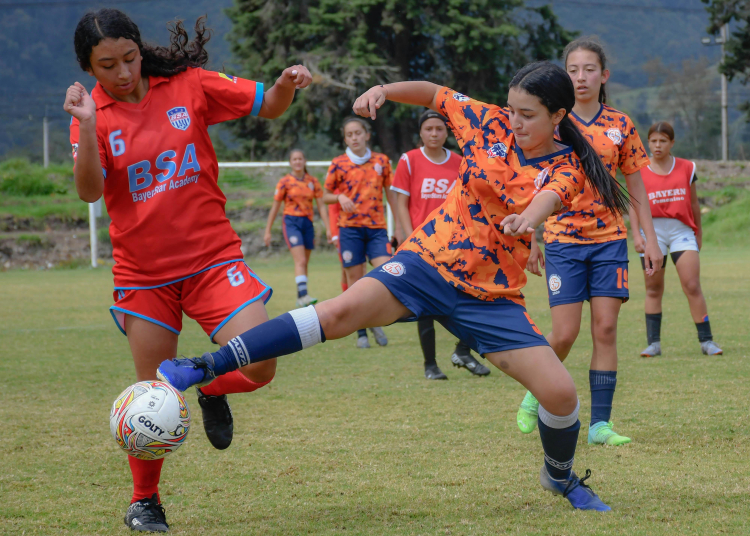
As teenagers retreat from social life, the gym may be one of the last places where real connection still happens.
A parent at a girls’ school recently described his daughter to me. A serious athlete, the girl had just come home from a tough loss – a game against a team they had already beaten earlier in the season. She carried the defeat heavily, struggling to balance her competitiveness with the composure competition demands. Her father wrote, with knowing affection, that she took on a disproportionate share of the blame
You know the type. And here is what strikes me about that portrait: this young woman had something to carry. She belonged to something real – a team, a season, a shared set of stakes– and it mattered enough to hurt. That kind of belonging is exactly what millions of adolescent girls today do not have. And that lack of belonging is becoming a crisis.
The statistics are stark.
According to data from the Institute for Family Studies, the social lives of adolescents have collapsed over the past four decades. In the 1980s, 88 percent of high school seniors reported visiting friends at least weekly. Today, just 69 percent do. Nearly three-quarters of teens in the 1980s attended parties at least monthly; today, fewer than half do. And where are they instead? Alone. Whereas 43 percent of high school seniors four decades ago spent significant leisure time alone daily, today that figure approaches three in four.
This is not a blip. It is a social recession – and girls are bearing its highest costs.
A major cross-national study found that school loneliness increased between 2012 and 2018 in 36 out of 37 countries, with larger increases among girls than boys. The World Health Organization now reports that teenagers are the loneliest people on earth, with roughly one in five experiencing persistent loneliness - and lonely teens are 22 percent more likely to achieve lower grades or qualifications.
Teenage girls are the loneliest single group of all, with nearly one in four reporting they feel lonely. Longitudinal research tracking young people from 2003 through 2024 finds that girls consistently report higher levels of loneliness than boys, with pre-pandemic data showing girls were twice as likely to feel lonely. A nationally representative U.S. study following adolescents into adulthood finds that lonely girls face significantly higher risks of depression, poor self-rated health, and obesity than their non-lonely peers – and that these outcomes are more pronounced for girls than for boys at comparable levels of isolation.
The causes are not mysterious. Researchers such as Jonathan Haidt and Jean Twenge have documented how adolescent girls spend more time on social media, engage in more frequent social comparison, and report more negative online experiences than boys. The smartphone has turned adolescence into performance – a cycle of posting, comparing, and being evaluated. Girls learn early to see themselves first from the outside: as an image, a curated self. The result is social comparison without social connection – the experience of being constantly aware of others while increasingly alone. Online harassment and relational bullying also fall more heavily on girls, and the always-on nature of digital life means retreat is nearly impossible. The school day ends; the phone does not.
This is the world adolescent girls are navigating today. And it raises an urgent question for the institutions that anchor and help guide their formation: what actually restores belonging?
Girls’ schools offer one important answer, and it lives, in part, in their gyms.
The research on sport and adolescent well-being is robust. Team sports enhance cooperation, social competence, and interpersonal trust - improving the quality of relationships, not merely their quantity. Competitive participation reduces loneliness by fostering public belonging: a felt membership in something larger than oneself. A 2025 longitudinal study following female adolescent athletes found sustained reductions in anxiety and depressive symptoms alongside stronger peer relationships that endured beyond a single season.
What makes sport powerful is precisely what distinguishes it from the digital world. The gym is phone-free, algorithm-free, and unfiltered. Social standing on a team depends on effort, reliability, and mutual dependence rather than popularity metrics. You cannot curate your way through conditioning drills or perform your way out of a defensive breakdown. You must show up physically alongside people who depend on you. Over time, shared struggle produces trust – and trust produces belonging of a kind no app can replicate.
Think again of that girl carrying her team’s loss home with her. That sadness is not pathology. It is evidence of investment: a young woman bound to something real, accountable to others, and shaped by shared effort. The loss hurt because the team mattered. And the team mattering is precisely the point.
This dynamic is especially visible in single-sex environments. Research on girls’ schools finds that self-efficacy levels are directly linked to participation in team sport and leadership roles – and that in single-sex settings, girls show confidence equal to their male peers, a pattern not replicated in coeducational environments. Without the constant pressure of cross-gender performance, many girls experience sports less as an audition and more as practice – a space to compete, fail, recover, and grow. They are not performing identity. They are forming it.
Schools that treat athletics as formative rather than peripheral are responding, whether intentionally or not, to one of the defining social challenges facing adolescent life today.
The best tradition of American education – from John Dewey and Horace Mann to numerous classical thinkers before them – has long held that schooling is not primarily about information transfer but formation: the cultivation of character, judgment, and the habits required for social life. Aristotle described virtue as something learned through repeated action within a community, not abstraction or instruction alone.
Sport, understood rightly, belongs squarely within that tradition. It cultivates the habits democratic societies depend upon: cooperation without coercion, leadership without domination, resilience in defeat, and commitment to shared purposes larger than oneself. These are not extracurricular virtues. They are civic ones.
At a moment when adolescent girls are lonelier than at any point in modern recorded history – when the informal social infrastructure of youth has quietly eroded, and digital life has replaced it with something thinner – institutions that rebuild durable communities of mutual dependence are performing essential civic work.
Citizens must practice belonging before they can sustain self-government. The danger facing this generation is not simply sadness or anxiety. It is the gradual loss of those formative experiences through which young people learn how to rely upon, and be responsible to, one another.
The loneliness recession cannot be solved by apps, awareness campaigns, or therapeutic language alone. It will be answered only by rebuilding the institutions and shared practices that place young people in genuine relationships with one another – settings where responsibility is mutual, effort is visible, and belonging must be earned rather than declared.
Sometimes that work begins in ordinary places. A gym after school. A practice that runs long. A team learning, together, how to recover from disappointment and try again. There, a group of young women becomes accountable to one another in ways no digital community can reproduce.
Alexis de Tocqueville warned that democratic societies depend not merely on rights or laws but on habits of association learned long before citizenship formally begins. Young people must experience dependence, obligation, and shared purpose if they are ever to sustain a free society.
When girls learn to rely on teammates – to carry loss together, to subordinate ego to common effort, to show up because others need them – they are learning something far larger than sport. They are practicing the art of belonging. And in doing so, they acquire one of democracy’s most essential skills: the ability not simply to stand alone, but to live meaningfully with others.
