The Chicago Teachers Union Hid Its Finances. Accountability Must Follow.

The Chicago Teachers Union spent years insisting it was financially transparent. The sudden release in January of previously hidden audits tells a different story — one that demands accountability.
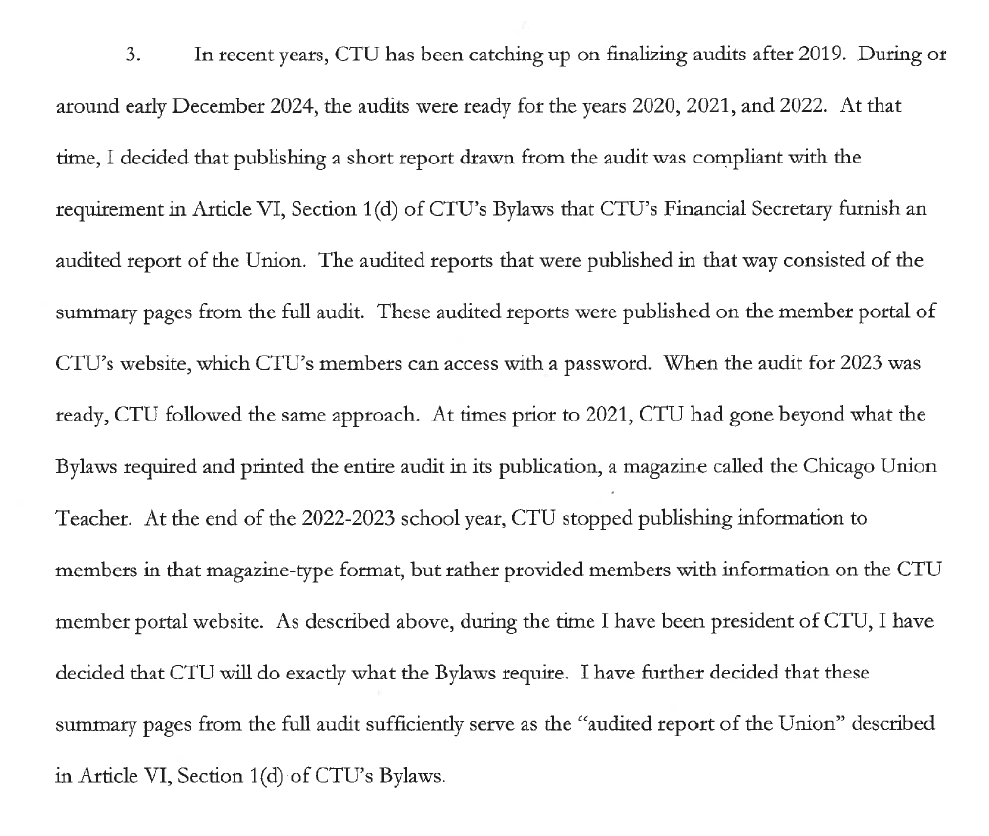
It's taken five years, a lawsuit filed by its own members, and congressional involvement for CTU to provide the audits it’s legally bound to release to members annually. It could take even longer to understand how discrepancies in the data affect members. They deserved better.
These documents were not shared as part of routine disclosure. They were produced under mounting legal and congressional pressure, after years of stonewalling, while CTU expanded its political influence across Chicago and Illinois. The last time the union published an audit was in 2020, for its 2019 fiscal activity.
During the five-year period when audits were withheld, CTU and its affiliates became the city’s largest political spender and a central force behind Chicago Mayor Brandon Johnson’s rise – spending nearly $6.5 million in the latest municipal election. Teachers who asked basic questions about union finances were bullied, even as leadership assured members the information existed and was available to them.
It was not.
The audits posted reveal years of contradictory reporting that should concern both union members and regulators. At one point, CTU President Stacy Davis Gates declared in court that the audits were unfinished and only completed in late 2024. Yet, federal filings she signed during those same years say independent audits had been conducted.
If CTU was actually years late in conducting an independent review of union financials, it appears Davis Gates was filing inaccurate reports with the federal government. Alternatively, if CTU did indeed procure those audits in a timely manner, but later changed or reproduced the audits to read differently, it begs the question of whether Davis Gates was misleading the court and her members.
Which is it?
That discrepancy could carry legal consequences. Accuracy in these documents is not optional, regardless of an organization’s political posture or popularity.
The audits also show that CTU routinely even presented the auditors with incomplete financial statements. Leadership shared “combined” financials that excluded the CTU Foundation, while “consolidated” statements including the foundation were withheld. In at least two of the years, auditors issued adverse opinions, concluding that the financials provided to members were materially misleading.
The CTU Foundation received the proceeds from the $50 million sale of Fewkes Tower in 2014 and later used that money to build the union’s headquarters, which the foundation now owns and leases back to CTU. Davis Gates serves as president of both the union and the foundation, with CTU Vice President Jackson Potter holding a similar dual role.
Members paying dues had a right to see how these transactions were structured and how their union’s resources were being managed. Instead, they got an incomplete picture.
At the same time, the spending records that have been available are suspect. Less than 18% of CTU’s spending was on representing teachers — what should be its core focus — and the union doubled its political spending in 2025, reaching a new high.
Davis Gates also gave herself a raise, bringing her total compensation to more than $273,000. And the union spent over $173,000 on a poolside “recording studio” in New Mexico in 2025.
The response from CTU leadership and its political allies has followed a familiar script: discredit the messengers, question motives, and shift attention away from the documents and the questionable spending.
Lawmakers, such as U.S. Rep. Delia Ramirez, D-Illinois, have attempted to reframe the audits controversy as a partisan dispute. Ramirez’s campaign committee has received more than $289,000 from the CTU.
The audits are not partisan documents. Federal reporting requirements are a basic obligation of any organization, and any that claim to represent workers and wield influence over public policy, should be held accountable for any potential misclaims or errors.
The union's main purpose — to protect teachers — is undermined when CTU leadership resists oversight and withholds information from its own members.
The path forward is clear. Regulators should fully examine the discrepancies in CTU’s financial filings. Union members should insist on independent oversight and strict enforcement of the bylaws that guarantee transparency. Elected officials supported by CTU should stop deflecting and acknowledge the seriousness of the findings.
The audits are now public. What matters next is whether anyone in power is willing to act on what they show.