


How Foundation Money Reshaped Sarah Lawrence College
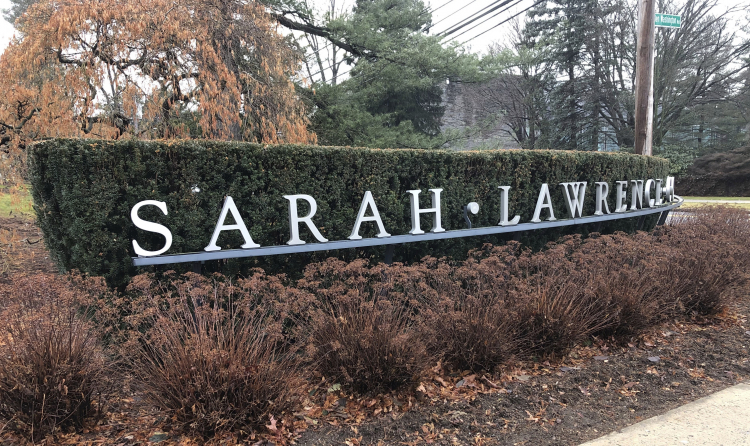
The Andrew W. Mellon Foundation is now in the spotlight. Recent reporting has documented how the nation’s largest humanities funder has spent years channeling billions into academic projects explicitly oriented around “social justice.”
The scale is staggering: a recent AEI study found that nearly 80 percent of disclosed private funding for the humanities, arts, and social sciences comes from just 25 foundations—and Mellon is the top giver by a wide margin, at more than $160 million in 2023 alone. During the 2010s, Mellon awarded nearly 5,000 grants totaling $2.65 billion.
But what does Mellon’s influence look like inside a single college, in real time?
I can offer a glimpse, because I teach at one and I have watched my institution change.
Sarah Lawrence College’s president, Cristle Collins Judd, arrived in 2017 directly from the Mellon Foundation, where she served as a senior program officer overseeing higher education and humanities scholarship. Judd helped decide who received Mellon’s money and on what terms. Remarkably, the Sarah Lawrence board appears to have treated this pipeline as an asset rather than a potential concern requiring governance guardrails.
That relationship did not end when she became president. Within a matter of months, Mellon awarded Sarah Lawrence $100,000 for presidential initiatives. It followed with a five-year, $1.2 million grant for civic engagement through the arts—the largest programmatic grant in the college’s history—and then $1.5 million through Mellon’s “Humanities for All Times” initiative, linking climate justice and the humanities. Mellon describes the program as demonstrating the humanities’ “relevance to broader social-justice pursuits.”
In total, Mellon has directed roughly $2.8 million to Sarah Lawrence under Judd’s presidency, from the very foundation she left to run the institution.
This is not merely financial. At this scale, philanthropy becomes governance: shaping priorities, staffing leadership, and defining what counts as injustice and what does not. The Mellon grants are mentioned constantly on campus—from hiring priorities to teaching initiatives—and Sarah Lawrence is hardly alone in receiving such funding. Mellon has shifted much of its grant-making apparatus toward social justice since 2020, seeding similar ideological frameworks at institutions across the country.
The consequences became visible within days of October 7, 2023. While Jewish students looked to their institutions for basic acknowledgment of the massacre, Sarah Lawrence’s own DEI director invited Jewish students to attend a “solidarity with Palestine” event sponsored by the Students for Justice in Palestine (SJP)—just two days after the worst attack on the Jewish people since the Holocaust. The pattern of administrative avoidance that would define the following years began that week.
What followed was not an aberration but a pattern. In April 2024, the college’s SJP chapter—which had visibly celebrated the October 7 atrocities—received the school’s Group Excellence Award at its Annual Leadership Awards ceremony, an institutional honor administered under administrative oversight and later shared on social media by Judd herself. In November 2024, masked students seized the main administrative building, distributing materials glorifying Hamas leader Yahya Sinwar and declaring they had “answered Hamas’s call.” The administration yielded to protesters’ demands rather than enforce its own conduct code. Hillel International’s president later described the environment for Jewish students at Sarah Lawrence as “among the worst we’ve seen.”
The moral abdication became undeniable in January 2026. Graffiti had appeared labeling Ezra Klein, a Jewish journalist critical of Israeli policy, a “Zionist pig” and a “Nazi normalizer.” At a campus event featuring Klein, organized disruptions created an atmosphere of intimidation. Masked protesters held a banner reading “Nazi” at audience members and chanted “Sarah Lawrence, we know you—you protect Zionist Jews.” Judd sat on the stage and did not intervene. When the protesters finally left, she turned to Klein and minimized the entire episode, saying, “Welcome to Sarah Lawrence College.”
The next day, Judd posted on her official Instagram that the evening had been “lively, thought-provoking, and a real-time demonstration of how to engage opposing (and seemingly opposing) views.” She then notably turned the comments off. Judd did later send a campus-wide email which used the right words—she named the slur antisemitic and referred matters to student conduct—but many weeks later, no visible action has followed.
Sarah Lawrence has roughly 1,500 undergraduates. The administration knows who organized the disruption and who circulated the slur. The SJP itself took credit and dared the college to act. The notion that this requires prolonged investigation is a bureaucratic fiction.
The federal government has noticed. The Department of Education opened a Title VI civil rights investigation into Sarah Lawrence in December 2024. The House Education and Workforce Committee has sent multiple letters demanding answers about the campus climate for Jewish students and the administration’s failure to enforce its own conduct standards.
Sadly, Sarah Lawrence is not unique. It is simply a small, unusually legible case of a national pattern: elite institutions that speak fluently about justice in the abstract, while rendering antisemitism administratively unrecognizable when it arrives wrapped in activist language.
The Mellon Foundation’s critics have focused on its funding of radical academic programs. That matters. But the deeper problem is subtler: Mellon’s social-justice framework produces leaders who cannot recognize antisemitism as a justice concern because it does not fit the framework.
When an institution’s moral vocabulary is built around decolonization and racial capitalism, Jewish students targeted for their identity become structurally invisible. They are not the right kind of victim.
The point is not that Mellon funds antisemitism directly. It is that Mellon’s worldview trains leaders to recognize some forms of hatred instantly and to proceduralize others into oblivion.
Cristle Judd is a former Mellon officer leading an institution that has received significant Mellon funding. The pipeline between the foundation and the college is not incidental. It is part of the ecosystem that makes such failures predictable.
Nor is Mellon unique in exercising this kind of influence. Large philanthropic foundations have long shaped intellectual priorities in American higher education—from the Ford Foundation’s impact on area studies during the Cold War to the Olin Foundation’s role in seeding law and economics programs. What is different today is the scale and ideological concentration of the funding, and the degree to which entire institutional vocabularies now grow from those philanthropic priorities.
Trustees, donors, and lawmakers who care about campus antisemitism should stop asking why individual presidents fail to act. They should start asking who trained them, who funded them, and what moral framework they were given. The Title VI investigation and congressional scrutiny of Sarah Lawrence are a start. But they address symptoms. The deeper question is whether major philanthropic foundations, which now effectively govern what counts as justice on America’s campuses, should face the same transparency and accountability demands we impose on the institutions they fund. Mellon did not merely finance initiatives at Sarah Lawrence. It helped install an architecture that can name every injustice on campus—except the one directed at Jewish students.
