


A Phone Ban Can Restore Learning, If We Restore Partnership
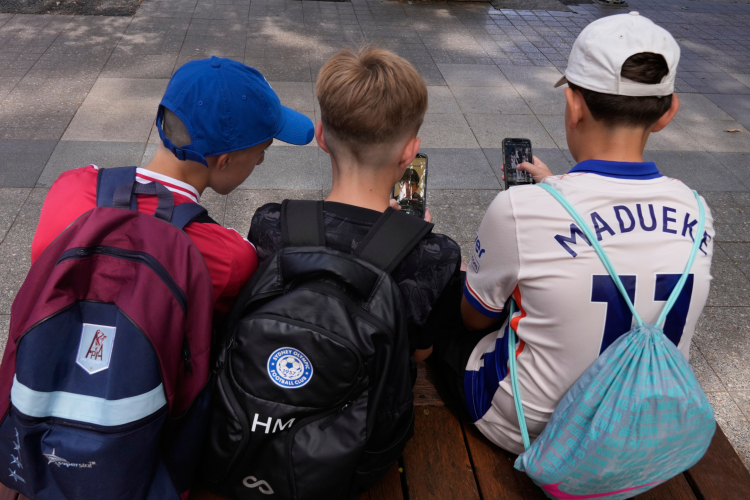
New Jersey is the latest state to adopt a bell-to-bell school cell phone ban, joining at least 38 other states that have adopted similar restrictions in an effort to reclaim the school day from the glowing rectangles in students' pockets. Now that these policies are established, parents should be keenly involved in the rollout and execution phases to set the conditions for success.
The landslide of legislation was borne out of concern over the rising mental health crisis among students, which followed the rise of social media and its increasing accessibility on personal devices. Today, four in ten high school students report experiencing persistent feelings of sadness or hopelessness, and two in ten students seriously consider attempting suicide.
Despite the recent waves of statewide mandates, students ages 13 to 18 are still spending an average of 70 minutes scrolling on social media apps and playing games on their smartphones during school hours, according to a new study published this month in JAMA. And public opinion on cell phone bans seems far from settled: While a Brookings survey shows 76% of teens and 93% of adults support cellphone restrictions, data from an EdChoice and Morning Consult poll shows that 71% of parents and 91% of teens felt that students should be able to have cell phones in school.
What this says to me is that these policies have largely been crafted in silos, without honoring the role parents play in successful implementation. We know cell phone bans can have a meaningful effect on reducing the social stress inside schools. They won't fix everything, but they also won’t fix anything if they’re not designed in partnership with families to address the unique needs of schools and districts.
Put plainly, fruitful policy implementation requires us to engage parents as true partners rather than treating them as another box to check off the list.
In 2019, I served as the executive director of a public charter school in Tulsa, Oklahoma. Like me, educators in the school were becoming concerned with the challenge of limiting phone distractions. We grew unsettled as more of our students slumped into their screens, walked the halls with their headphones on, and bowed their heads in their laps in an effort to hide the phones they were holding under their desks.
As a school that prioritized the professional autonomy of the classroom teacher, my principals and I initially encouraged teachers to administer their own classroom phone policies. But by the end of the year, a new wave of bullying had materialized, and teachers were exasperated with feeling like cellphone police. We needed a school-wide policy. The experience that unfolded made our charter school community one of the country’s earliest adopters of a cell phone restriction policy, but the rollout was not without challenges.
Most notably, parents expressed an overriding concern: “If something happens, how do I contact my child?”
It’s not a trivial question and our school didn't dismiss it. We invested time and energy into creating the space for these critical conversations through our open-door policies, by hosting events that welcomed parents into the classroom, scheduling town hall forums, and through the personal relationships between parents and school staff. Eventually, we landed on an answer that was so mundane it was novel: Each student received a locking pouch that made their phones inaccessible throughout the school day, and parents called the school office when they needed to contact their student.
In an emergency, the school can move faster than a parent texting a child. On an ordinary day, if a parent needs to adjust a pickup plan, the office can get the student quickly. For decades, that's how schools worked. We didn't invent a new communications system; we simply restored one.
Once implemented, the effect was immediate. Passing periods and lunch hour looked and sounded alive. The halls had chatter, laughter, eye contact. It didn't solve every problem, but it made learning and human connection easier.
That experience also taught me something about the broader mental health debate. Schools have a critical role to play, but they cannot do it alone. In education, we often call for centralized solutions and programs because they feel decisive and actionable. Adolescent mental health, however, is experienced locally: in homes, in friendships, in communities, and in the day-to-day environment of a particular school.
The smartest phone policies are built as compacts. Families need credible communication plans. Schools need consistent rules that free the classroom teacher to focus on instruction. Students need clear boundaries to set them free from doom-scrolling. We all need honesty about what this is and isn't: a school phone ban is not a cure-all for our societal ills; it is a practical step for schools to function as institutions for high-quality teaching and learning.
As President Reagan was often cited as saying, education begins in the home, and our education system should be a partnership between parents and teachers, where both work in concert. Above all else, he believed parental involvement was key to excellence in education, expertly noting that parents “care about their children's education with an intensity central authorities do not share.”
President Reagan’s powerful legacy of parent engagement is vital to the current debate over how to best address student mental health concerns, including through cellphone bans and other policies. Treating parents as equal partners is the most effective way to drive sustainable success across the entire K-12 system.
