


Apprenticeship Can Solve The U.S. Economy’s Entry-Level Worker Paradox
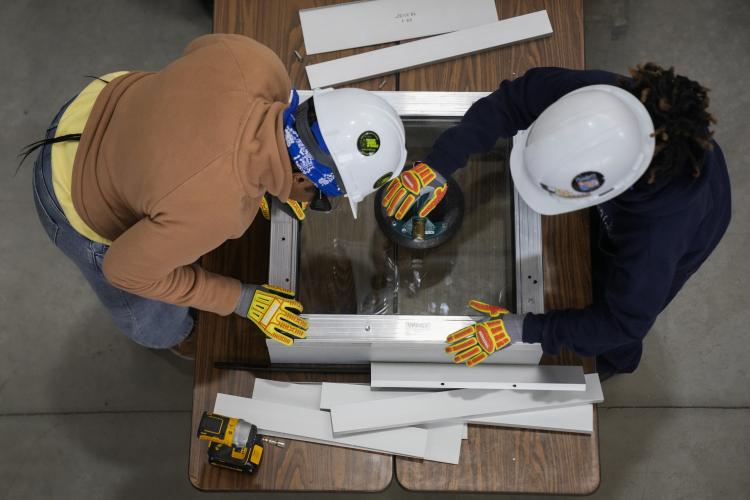
Today’s job market is exceptionally tough for both new entrants to the workforce and the companies that traditionally hire them. Whether it’s due to a “low-hire, low-fire” labor market, an unpredictable economy, concerns over the skills of new graduates, or employers’ growing reliance on artificial intelligence, entry-level hiring has slowed dramatically.
According to one survey, only 30% of the college class of 2025 reported finding a full-time job in their field upon graduation. Job postings on the popular Handshake platform, a favorite of current college students and recent graduates, have declined by 16% in the past year. The unemployment rate for recent college graduates continues to inch upward toward 6%, the highest it has been in more than a decade, and remains twice that of the jobless rate for all college graduates. Last spring, the Bureau of Labor Statistics reported a stunning 12% unemployment rate for college graduates in their 20s. Oxford Economicsestimates that new grads account for 12% of the rise in the national unemployment rate since mid-2023.
It’s understandable that companies aren’t looking to hire as many entry-level workers as they once did. By many accounts, they’re dissatisfied with the quality of graduates that our education system is producing. But if companies are slowing down hiring for entry-level workers, they’re about to run into an obvious paradox: Who will become their future talent? Where will the next generation of company leaders come from? Is a diamond-shaped workforce – where entry-level jobs erode, the pool of potential future managers dries up, and middle managers are stuck with all the work – the endgame for U.S. employers?
Keeping the labor market healthy means solving this paradox. It requires employers to ensure that entry-level workers can find work that helps them gain industry- and company-specific skills and experience. But of course, even the most altruistic companies will only hire workers who they trust to actually do the jobs they need done.
The solution to this challenge is a model that can both help early-career workers land jobs and ensure that employers get a return on their investment in talent. The good news is that such a model already exists. It’s called apprenticeship, and by design, it both smooths the path to work for entry-level workers and reduces the risk for employers by ensuring they can try before they buy.
The apprenticeship model – essentially a paid on-the-job training program, supplemented with classroom instruction – creates a pipeline of fresh talent that understands not just the specific skills they need for the job, but the workplace culture and context in which they’ll be implementing those skills. It’s gaining in popularity among big firms like Accenture, which (perhaps not coincidentally) is bucking the current trend by hiring more entry-level workers than ever.
A body of research suggests that apprenticeship is a good deal for workers and for the companies that hire them. Apprentices see a significant bump in pay as they transition into full-time work, and earn $300,000 more over their lifetimes than their peers who travel other employment routes. Apprenticeship also helps with retention: according to the U.S. Department of Labor, more than 90% of individuals who complete an apprenticeship program stay on with their employer. That may be why the model is surging in popularity in the United States. The number of registered apprentices here has grown by nearly 80% over the past decade and now stands at more than 700,000 nationwide. Most importantly, apprentices don’t look like typical entry-level candidates. By the time they move into full-time roles, they already have the equivalent of 18 months to two years of experience and the precise toolkit of skills they need to succeed.
Of course, despite the impressive return on investment, there are plenty of good reasons businesses aren’t chomping at the bit to launch programs. It is unquestionably complicated and time-consuming to design, build, and deploy this particular training model for so many different kinds of roles across an entire organization. And it’s hard for individual companies to justify a major new investment in training when they can often get by through poaching more experienced workers. But there’s a solution to this problem too: a growing number of so-called intermediaries – apprenticeship service providers, staffing companies, hire-train-deploy models, and emerging tech services companies that incorporate these roles – are emerging to make the set-up process easier. Simply put, for the business community, it’s never been more straightforward to say yes to apprenticeship. And given today’s hiring landscape, it’s never been more important.
Reducing entry-level hiring might feel like a smart move for companies in the short term. But it could be disastrous for the economy in the long run. If businesses start prioritizing apprenticeships now, they can both solve their near-term talent crunch and lay the foundation for a sustainable workforce.
