


The Real Crisis in Higher Education Isn't Just Ideology, It's Faculty Decline
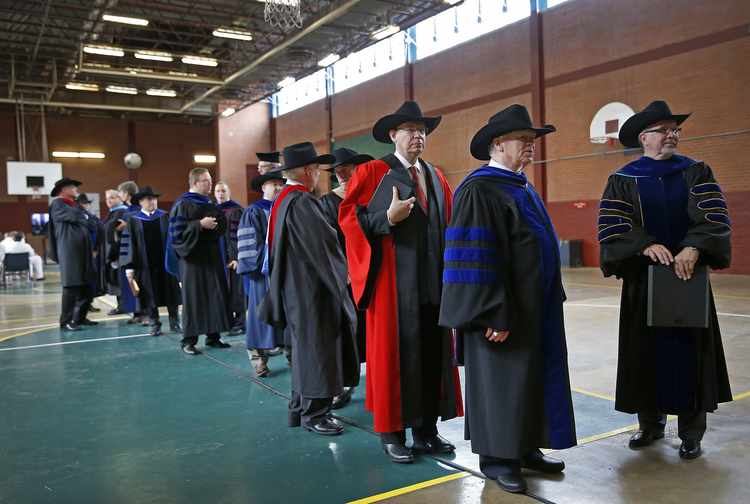
Observers across the political spectrum have identified a real problem in American higher education: too many campuses have drifted from genuine inquiry toward ideological performance and political engagement. That diagnosis is not partisan. It reflects a widely shared concern that universities are prioritizing critique over inquiry, activism over scholarship, and signaling over substance.
But even that diagnosis is incomplete - and the missing piece matters enormously for how we respond.
A quieter, more structural crisis is unfolding beneath the ideological one: the erosion of faculty pay, stability, and dignity. Until we take that seriously, we will keep treating symptoms while the underlying condition worsens.
The numbers are stark. As The Chronicle of Higher Education reported in 2025, inflation-adjusted faculty salaries declined by 1.5 percent nationally from 2013 to 2023, while average salaries across all industries rose by 7.7 percent over the same period. Over that same stretch, core costs of living - housing, insurance, and everyday expenses - rose sharply, leaving many faculty effectively poorer year after year. For full professors, real pay fell by 3.2 percent. Administrative salaries, meanwhile, grew. According to the AAUP's Annual Report on the Economic Status of the Profession, presidents of doctoral institutions saw median base salaries increase by 27 percent between 2019 and 2023; full professors saw 10 percent. The priorities are visible in the numbers.
Today, roughly two-thirds of faculty are contingent - adjuncts, lecturers, visitors, and instructors with little job security and wages that often require teaching at multiple institutions. Even tenure-track faculty face stagnant wages, heavier course loads, and diminished institutional support. One sociology professor at Broward College watched his nominal salary grow from $56,000 to $67,000 over more than a decade - an effective 15 percent pay cut in real terms. He now teaches ten courses a semester across two institutions, "speed grades" student papers, and has shelved his research agenda entirely.
This is not simply a story about underpaid workers. It is a story about institutional transformation and what that transformation does to academic culture.
For much of the 20th century, the American professoriate occupied a distinctive role in civic life, defined by intellectual autonomy, long-term investment, and stewardship over disciplines, students, and institutions. Faculty had time to read deeply, revise courses, mentor students, and pursue scholarship beyond the immediate political moment. They were custodians of a tradition. They sustained the habits of inquiry that made intellectual life possible.
That world is disappearing and has vanished for many. In its place is a system that rewards speed, visibility, and performance over depth, substance, and reflection. The shift is subtle but profound: from formation to throughput, from scholarship to deliverables.
Here is where the critique needs sharpening. The rise of ideological intensity on campus is not just about ideas: it is about incentives and conditions. A professor who feels economically secure and institutionally valued is more likely to take intellectual risks, engage competing viewpoints, and invest in demanding scholarship. A professor who is overworked, underpaid, and professionally precarious is more likely to retreat into safer, more performative modes of engagement - the kind rewarded quickly and visibly within the current academic ecosystem.
In other words, sustained material pressure can produce intellectual conformity. Not always, but systematically enough to matter. The campus culture so often criticized is, in part, a downstream effect of the conditions under which faculty now work.
This helps explain a paradox observers often miss. Even as universities have become more administratively complex and financially strained, they have grown more rhetorically maximalist - issuing statements, amplifying ideological frameworks, and embracing causes that require relatively little investment. It is far easier to adopt a language of critique than to rebuild the conditions for serious scholarship and far less costly.
None of this excuses faculty from accountability or their disruptive behavior. Rebuilding professional conditions does not mean insulating bad actors or abandoning the push for intellectual diversity. The reform agenda remains necessary. But it becomes more tractable - rather than more difficult - when we understand the structural pressures shaping faculty behavior.
The fact that faculty are increasingly turning to unions is evidence of institutional failure, not a policy prescription. When professionals with advanced degrees and commitment to their students feel they have no other recourse, something has gone wrong well upstream of the bargaining table.
If we want a more intellectually diverse, rigorous, and confident academy, we cannot simply demand better arguments and braver professors. We must rebuild the profession that produces them. That means confronting hard questions about administrative growth, spending priorities, and resource allocation within universities - questions that should be central to anyone concerned with institutional health and civic purpose.
Investments in faculty are not optional or nostalgic. They are foundational.
And when they are neglected long enough, the university does not become more open or neutral. It becomes more brittle, more performative, and less capable of sustaining the serious intellectual life a free society requires.
