


Hampshire College and the Marketplace of Outcomes
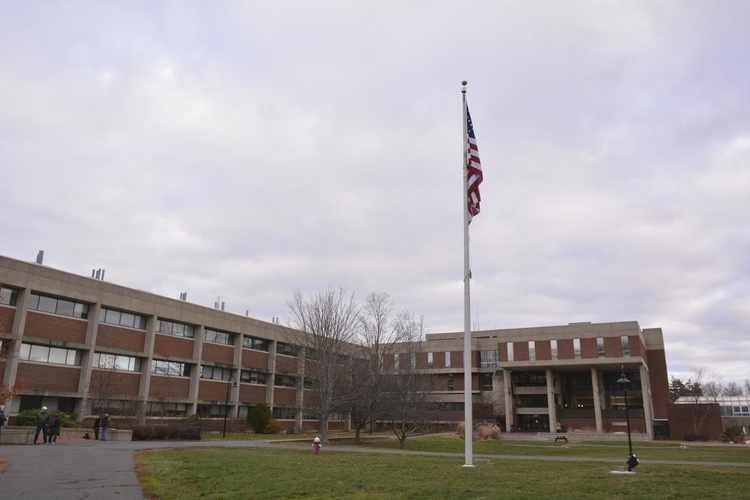
The closing of Hampshire College was not a surprise. It was a long time coming, and its demise reflects a broader shift in what families now expect from higher education.
At its peak, Hampshire enrolled well over 1,200 students. Federal data shows enrollment has fallen by nearly half since 2015 - dropping to 844 in fall 2024, then roughly 750 this past fall, with the incoming class arriving at only 168 students against a target of 300. A tuition-dependent college can absorb quite a bit, but it cannot survive losing so many students at that pace.
The various reports about Hampshire’s impending closure cast this as a financial story. Demographics. Rising costs. Debt load. Those things are all true, but there is more to the story. A contributing and under-discussed factor here is that Hampshire did not simply run out of money; it struggled to attract enough students willing to pay for what it was offering.
I teach at Sarah Lawrence College, which shares much of the same basic DNA as Hampshire: non-traditional pedagogy, interdisciplinary work, deep student autonomy. I know this world from the inside. And I also know that the question Hampshire could not answer is the same one that haunts many institutions like mine.
When costs keep climbing and post-graduation opportunities are scarce or disappearing, families cannot afford to bet on a model that cannot show results. The question is simple: What does the degree buy you?
For decades, Hampshire was one of the more novel experiments in American higher education. Founded in 1965 and opening to its first students in 1970, it dispensed with grades, majors, and distribution requirements. Students built their own programs. The bet was that freedom, properly extended, produces rigor.
For some students, it did. Hampshire sent a disproportionate number of graduates on to Ph.D. programs in the arts and humanities. It cultivated independent thinkers and creative professionals. The model worked for a particular kind of student: self-directed, intellectually serious, comfortable with ambiguity.
But there is a harder question underneath that, and higher education has been avoiding it for far too long: What does the education do for the typical graduate?
Families are now asking that question out loud. What will my child study? What will they know how to do? Where will they work? These are not philistine concerns. They are reasonable expectations from people making six-figure investments.
Consider what Hampshire itself chose to put forward as representative of its intellectual mission. In a promotional feature shared on the College’s webpages and circulated online, Noah Romero, Hampshire’s Assistant Professor of Native American and Indigenous Studies, framed his pedagogical project this way: “The future depends on Indigenous knowledge. If we want to decolonize education, that means undoing, dislodging, subverting, all those things that make up the foundational DNA of everything that we see navigating a settler society like the US.” His published course catalog delivers on the thesis: Indigenous Nihilism. Indigenous Anarchy and Autonomy. Decolonial Undergrounds: Indigenous Autonomy through Subculture. Education for Liberation: Decolonizing Teaching and Learning. His “Indigenous and Decolonizing Education” course, for instance, opens with the description “How has compulsory education been used to perpetuate colonialism and its associated discourses, like racism, cisheteronormativity, white supremacy, anti-Blackness, ableism, and Indigenous dispossession?”
Whether representative of every Hampshire faculty member or not, this is what the institution chose to amplify. And when that is what a college chooses to put forward as its intellectual identity, it narrows the audience considerably.
Dartmouth president Sian Leah Beilock put it plainly in a January 25 Wall Street Journal op-ed titled “Is a Four-Year Degree Worth It?”: a college education is one of the largest investments a family will ever make, and there must be an undeniable return. Are graduates employed? Are they contributing? Are they equipped? And the answer cannot be award-winning filmmaker Ken Burns - a famous Hampshire graduate. It has to be the typical graduate: what they earn, where they land, how long it takes them to get there.
Notably, Beilock didn’t just make the argument, she built the infrastructure to back it up. One of her signature initiatives was launching the Center for Career Design, explicitly tasked with tracking and improving graduate outcomes. The results speak for themselves: 71.7% of Dartmouth’s Class of 2025 accepted full-time jobs, with another 21.9% continuing their education - and overall employment placement was up 14% over the prior year. That is what it looks like when a liberal arts institution decides to take outcomes seriously and measure them honestly.
The best liberal arts education has always combined freedom with structure, curiosity with discipline. Tocqueville understood that in a democracy, citizens need to be taught to think beyond their immediate self-interest. That requires exposure to history, philosophy, literature, and the sciences. But it also requires accountability. The two are not opposites.
The consequences are predictable. For highly motivated, self-directed students, an unstructured model can work brilliantly. But for most students, the absence of structure produces drift, not rigor. And in a world where employers increasingly want evidence of skills, adaptability, and critical thinking - demonstrated, not just asserted - a transcript that lists no grades and no majors is a hard sell.
The lesson for small liberal arts colleges is not to become vocational schools. It is to stop assuming that the value of a liberal arts education is self-evident. It is not. It has to be made legible - in outcomes data, in career placement, in the ability to articulate what graduates can do and why that matters. Careers that require rigorous reasoning - law chief among them. The problem is not the product. It is that the institution rarely makes that case clearly. Dartmouth, though a wealthy Ivy, has made it legible that the liberal arts matter and that it has a practical, professional path for students entering the post-graduate world.
Hampshire never managed that translation. And the schools that share its philosophy - including, I will say directly, my own Sarah Lawrence - need to reckon with why - and quickly.
Experiments are judged by results. Over time, too few students and too few families believed Hampshire’s model delivered for them. That verdict is not ideological. It is market reality, and other institutions ignore the last big lesson from Hampshire at their peril.
Ideals are not enough. Colleges have to show what their students become. Hampshire offered freedom, but freedom alone is insufficient in a market that wants outcomes and went elsewhere to find them.
