


A Centennial-Year Address That Forgot the Graduates
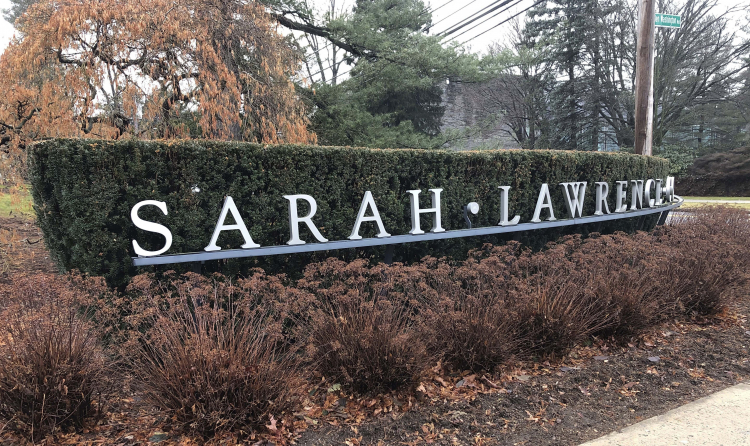
I want to say something to the Class of 2026 that Sarah Lawrence College did not say at Commencement. They deserve to hear it plainly.
On May 8, 2026, Sarah Lawrence held its 98th commencement in the centennial year of its founding. The date mattered. Exactly one hundred years earlier, Sarah Bates Lawrence had died, and the college her husband soon chartered would bear her name. A school that has spent a century telling a story about audacious, student-centered education had a rare opportunity to renew that story in front of the students who embody it. Sadly, it did not.
I have taught politics at Sarah Lawrence College for nearly two decades, and I have never seen a graduating class look as deflated as this one did under the tent on Friday. These were students I know well - their tutorials, their theses and conference papers, their intellectual growth. They came ready to be addressed and they were not.
President Cristle Collins Judd's prepared remarks began with familiar and appropriate notes -history, mission, milestones, student activity. Then came the hinge: "just as the early years of our College unfolded against a backdrop of a deeply unsettled world, so too did your years here." From that point on, the speech was no longer about the graduates. It was about the institution.
The problem was not simply that the speech was flat. It was flat in a revealing way. This was not a commencement address. It was an institutional statement delivered to a captive audience in caps and gowns.
Consider how the past four years were described: "differences, challenges, fears, and anxieties that are profound, fundamental, and deeply unsettling." That language is careful. It is also empty. It names nothing. Not October 7. Not antisemitism. Not the fall of 2024 takeover of the Westlands administrative building. Not the disruption of Ezra Klein's January appearance on this campus, where an antisemitic slur was painted on a campus expression board and acknowledged the next day by the administration itself. Real events are translated into abstract conditions.
Then come the "principles" - belonging, diversity, free expression with "mutual respect," and academic freedom. All reasonable. All familiar. All administrative. These are not wrong commitments. But they are not a charge to graduates. They are a positioning document.
The speech also revealed something more structural about the institution itself. Faculty are present - but only as a category to be thanked. Students are visible - but largely as participants in a system. What is missing is the intellectual core of Sarah Lawrence: the tutorial, the argument, the friction of ideas that defines the place at its best.
Instead, the institutional voice collapses into a single register. The presidency narrates the college - its values, its tensions, its identity - while the faculty and students who constitute its intellectual life are acknowledged but not meaningfully elevated. Commencement becomes less a moment of academic recognition and more a moment of institutional self-description.
This is not a failure of tone. It is a failure of orientation. And in a ceremony meant to mark the culmination of students' intellectual lives, the most fully realized presence on the stage was the institution itself.
What is missing is what commencement is for.
There is no call to vocation. No sense of citizenship. No demand for judgment, courage, or responsibility. No acknowledgment that the students sitting in front of her are about to enter a world that will test them in specific and serious ways. Instead, the graduates become the backdrop for an institutional message about itself.
This has become a genre across elite higher education. Commencements increasingly double as public-facing statements of institutional values - carefully calibrated, reputationally safe, and ultimately detached from the students they are supposed to address. The result is predictable: no one leaves inspired, because no one has been asked to do anything.
That is what makes this moment, in a centennial year, such a missed opportunity. Sarah Bates Lawrence never pursued a college education herself, yet championed education for women throughout her life. The institution chartered in her name took up that conviction and built a pedagogy around it: the tutorial, the conference, the thesis, the don system - all of it premised on a wager that young people, given trust and responsibility, would rise to it. A commencement worthy of that tradition would have made the same wager again.
It would have looked the Class of 2026 in the eye and asked something of them.
So let me say plainly to my students what the College did not: I am proud of you. I have watched you do serious intellectual work. I have watched you disagree without walking away. I have watched you persist through four difficult years that would have tested any cohort. What matters now is that you do not drift. Seek out difficulty. Argue honestly. Take responsibility for the institutions you enter rather than simply inheriting their language.
You are entering a world that will demand more clarity, more courage, and more seriousness than you were asked for on Friday. I have no doubt you are ready. The College missed its moment. The next one belongs to you.
