


Reports of The Death of 'Woke' May Be Greatly Exaggerated

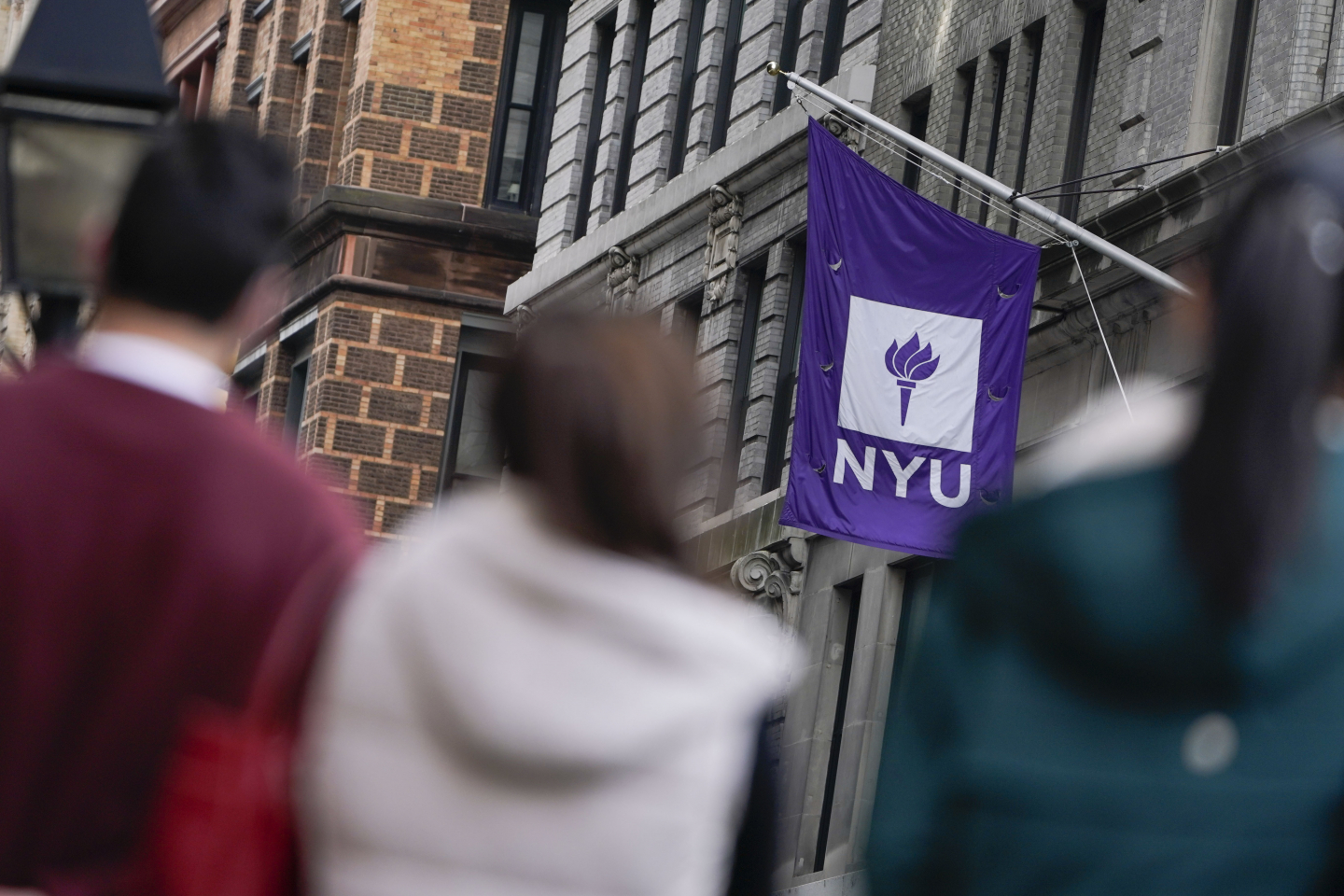
The NYU Executive Committee of the Student Government Assembly expressed “profound disappointment” that their graduation speaker was to be internationally renowned social psychologist Jonathan Haidt. In a Statement on All-University Commencement, the committee asked the administration to “reconsider.”
“The pivot from figures of universal inspiration,” NYU students complained, “to an individual who has been accused of making homophobic remarks in a class and public misconceptions about transgender identity, and has promoted disturbing rhetoric around antiracism, social justice, and diversity, equity and inclusion, claiming that the abolition of DEI may be the only way out of the Leftist ideological capture of American campuses, is deeply unsettling and clearly undermines the University's stated values.”
Those accusations are deeply mistaken and profoundly misleading. The one accurate claim is that he did acknowledge that the abolition of DEI might be the only way for academia to correct course. So Haidt is clearly not an inspiring choice for students who are attached to that destructive paradigm.
But Haidt is nothing if not a figure of inspiration for parents, writers, and budding social scientists. He has produced four bestsellers, of which three, including The Coddling of the American Mind, are global blockbusters. His latest, The Anxious Generation, has spent over a year on international bestseller lists, leading to not only parental and community efforts, but real policy changes to protect the mental health of children and adolescents.
This includes an initiative at NYU called “IRL” (In Real Life). As a result of Haidt’s work, designated spaces on campus are device-free to encourage face-to-face interaction and time away from the distractions of social media. The student statement, however, unironically asks whether the choice of Haidt was “yet another effort to push the IRL narrative.” At elite universities, where everything is “narrative,” even efforts to encourage friendships and immersive real life experiences can only be interpreted as an effort to push a narrative.
“Many students have reported feelings of disappointment, disgust, unenthusiasm, defeat, and embarrassment” as well as “being misunderstood,” the statement reads. Awkward phrasing aside, at least these students didn’t insist that Haidt’s selection was “harmful.” When I worked with Greg Lukianoff and Haidt on The Coddling of the American Mind, attempts to disinvite and deplatform speakers were often framed as efforts to protect vulnerable students from the “harm” of speakers’ words — or even the speaker’s mere presence.
Psychologists at UCLA, Harvard, and Ohio State have found that believing words can harm is associated with worse mental health: more anxiety and depression, less resilience, and worse emotion regulation. And when students see words as violence, they can become willing to endorse actual violence in response to speech — or even to prevent it.
According to the Foundation for Individual Rights and Expression (FIRE), Gen Z is roughly 10 times more accepting of using violence to prevent speech than Baby Boomers, and more than 25 times more than the Silent Generation. Roughly 43% of Gen Z survey participants refused to endorse the view that violence against speakers is never acceptable.
As of May 7, campus deplatforming attempts had surpassed 100 for the year, according to FIRE’s publicly accessible Campus Deplatforming Database. In the first quarter of 2026, reports FIRE’s Chief Research Advisor, Sean Stevens, 65 of 70 attempts succeeded.
While failed deplatforming attempts are bad enough, at least they “show that institutional safeguards are holding,” Stevens says. “A successful attempt signals that those safeguards are eroding. If nearly all deplatforming efforts are now succeeding, then the problem is not simply that controversial events are being challenged. The problem is that universities appear increasingly willing to fold under pressure.”
Protesting commencement speakers is hardly new. When I graduated from Barnard College in 1990, students at Wellesley College were “outraged” by the choice of their commencement speaker, Barbara Bush, because she wasn’t a career woman.
But when students of past generations tried to school their elders, their elders schooled them right back. Psychiatrist and author Jean Baker Miller called those students’ objections “simplistic.” Wellesley alumnae quipped that the class of 1990 had apparently not learned the school’s Latin motto: “non ministrari, sed ministrare,” not to be served, but to serve.
And the pushback wasn’t partisan. Feminist Pat Schroeder offered, “I have nothing but respect for Barbara Bush.... Being a wife and mother is not a protestable offense. After all, if it weren't for mothers, there would be no students at Wellesley.” Mrs. Bush, always the soul of discretion, said simply, “They're 21 years old and they're looking at life from that perspective.”
Gen Z has been less fortunate. Instead of university administrators and other leaders asserting their authority, they have increasingly appeased and indulged students’ emotional instability, arrogance, and even rule-breaking — including with respect to disruptions, harassment, threats, mobbings reminiscent of Maoist struggle-sessions, and even violence. This is not beneficial for anyone, including those students who violate the boundaries of protected free expression.
Both Jonathan Haidt and Barbara Bush delivered their keynote addresses. Mrs. Bush’s is now included in NPR’s list of best commencement speeches of all time:
“As important as your obligations as a doctor, lawyer or business leader will be,” she said, “you are a human being first. And those human connections—with spouses, with children, with friends—are the most important investments you will ever make.”
That advice has never been more true or more necessary. And it’s not so different from the message NYU graduates heard from Haidt on Thursday. “Call someone you love just to say hi,” he told them, “Invite someone to dinner. Say yes when someone invites you. Be the one who makes things happen in the real world.” Hopefully, the graduating class learned something from him.
