


You Can't Outsource Belonging
Colleges keep answering student isolation with apps, offices, and slogans. But connection is made by people, in rooms, on purpose.
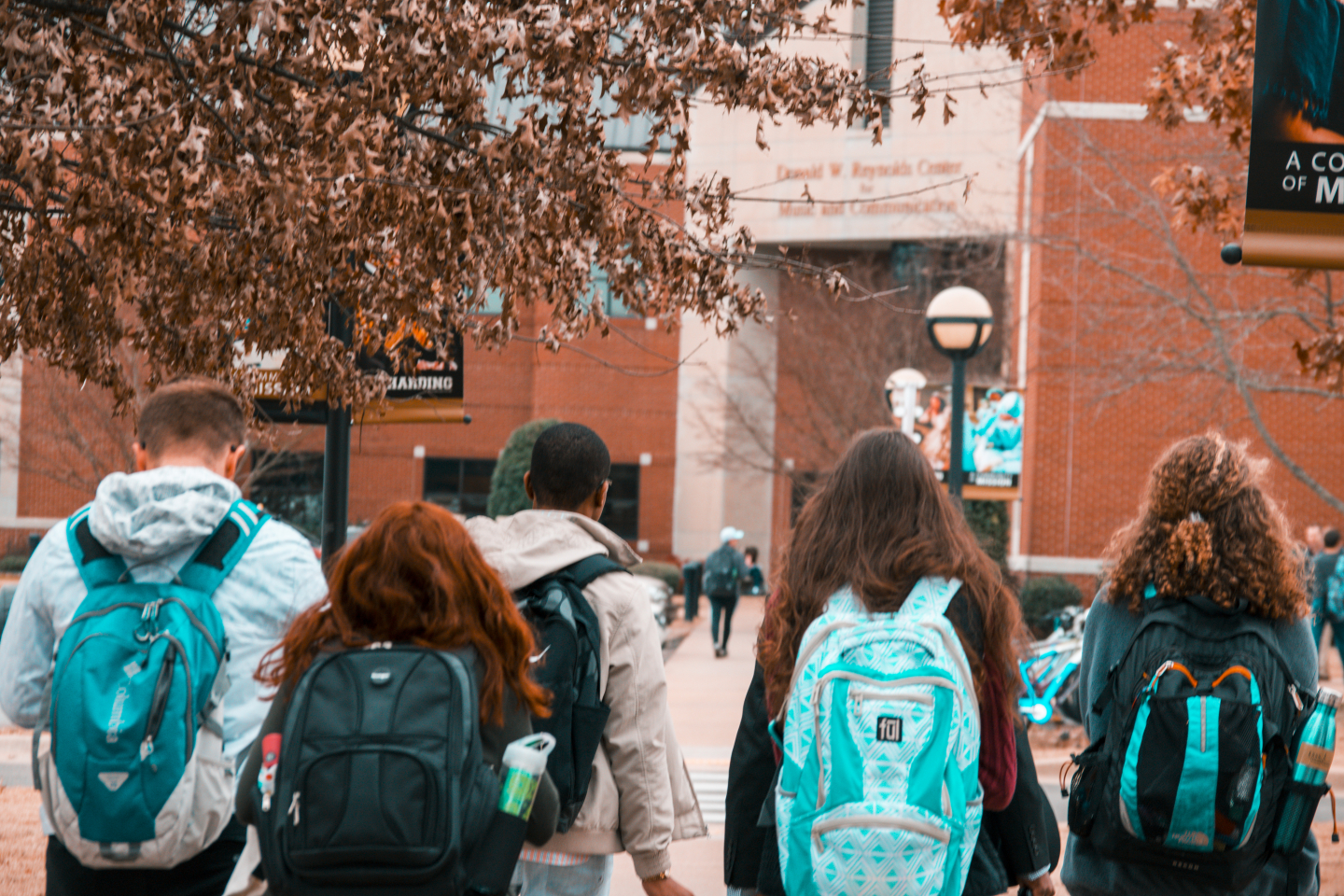
The most important teaching I do in a course sometimes happens before we open a book, assign a reading, or discuss an idea. I was reminded of this by a recent New York Times interview with the Yale psychologist Laurie Santos, who described something every teacher recognizes at once: she walks into a seminar, finds her students seated around one table, and none of them are talking. They are on their screens. The dining hall is the same; young people are present physically in the same room, but socially apart.
It is tempting to blame the phones, but the deeper shift is older. Santos points to the musician David Byrne, whose 2017 essay “Eliminating the Human” argued that much of our most celebrated technology shares a single feature: it removes the need to deal with other people. We bank at a screen, let an algorithm choose our music, and order dinner without a word. App by app, we have engineered the small frictions of daily life out of existence. We have also eliminated many of the human encounters buried inside them.
The result is a country more connected digitally and, too often, less connected in person. The American Enterprise Institute’s 2025 American Neighbor Survey found that the share of young adults who talk with their neighbors even a few times a week has fallen from 51 percent in 2012 to about 25 percent. We have, as Lulu Garcia-Navarro put it in her interview with Laurie Santo, become a nation of indoor cats.
Schools cannot reverse this technological wave, and should not try to wish away the technologies that define modern life. But they can decide how to respond. My answer begins with a claim that sounds smaller than it is: belonging is not a campus service. It is a pedagogical responsibility.
This is not a new project for me. For more than a decade I have deliberately spent the opening days of my courses helping students build relationships before the real academic syllabus begins. At first glance it can look like a waste of instructional time; there is a great deal of material to get through. I have found the opposite to be true.
When I teach a course on social capital, I take my students bowling. The nod to Robert Putnam’s Bowling Alone is intentional, but the exercise does real work - for a few hours they talk, compete, laugh, and come to know one another.
My seminars in American politics and political geography begin somewhere even less like a classroom: Grand Central Terminal. The students show up starry-eyed and a little overwhelmed - many are new to the city, and most are still strangers to one another. We stand together under the great vaulted ceiling while I point out the constellations painted across it and tell them the strange history of that sky. Then we take the subway downtown, walk out to the Battery, and board the ferry. You can watch their faces open as we move through the harbor, Ellis Island off one side and the Statue of Liberty off the other; the geography and the civic history we will spend the term studying, laid out across the water. And somewhere out on the deck, without any prompting from me, they begin to talk. By the time we are back on the subway, the seminar that filed nervously into Grand Central a few hours earlier has become a group. We get lunch in lower Manhattan, then head back to the train, and that is the day.
Have I sacrificed a week of instruction? Not at all. I have gained a semester. The payoff shows up the very next week. Students walk into the second and third meetings together, already collaborating. The awkward, anonymous ritual that usually eats the first month - going around the table to recite your name and your hometown - has simply happened on its own, out in the world, where talking to the person beside you was easier and more interesting than staring at a screen. Conversations are underway before class begins. Study groups form without my asking. Discussion grows richer because students are comfortable speaking with one another rather than past one another. And friendships take root.
That matters because education has never been only about transmitting information. If it were, students could simply watch recorded lectures alone. The challenge becomes even more urgent as virtual asynchronous education and artificial intelligence makes individualized experiences easier and more attractive than ever. And when answers arrive on demand, the distinctly human work of education matters more, not less.
Schooling has always done something larger and quieter: it forms people through habits of attention, conversation, trust, and belonging - the social skills a free society runs on. Students learn from their professors, yes, but also from roommates, teammates, classmates, and friends. They meet people unlike themselves, negotiate disagreements, practice cooperation, and learn how to belong to a community. These are not distractions; they are the formation that is its oldest purpose.
Too often we treat belonging as a happy accident, assuming students will bond simply because they live near one another and share a classroom. That was never quite true, and it is less true now. Yet when colleges recognize that their students are isolated, the reflex is to professionalize the problem - to create offices and more staffing positions, fund an initiative, license a wellness app, hire outside consultants to create bureaucratic solutions.
But this behavior and these responses rests on a quiet error: the belief that it is a service an institution can deliver, rather than something that has to grow between people. You cannot program friendship into existence or assign it to a department. And when we try, we tell faculty, without quite saying it, that belonging has become someone else’s job - exactly when students need the adults already in the room to take it up.
I can hear the objection, because I have leveled it at other people’s teaching: easy for him. I work at a small college, in seminars, with the latitude to trade a week of syllabus for a day in the harbor. Most faculty have no such luxury - the adjunct shuttling between five sections, the lecturer facing two hundred students in bolted-down seats. The objection is fair. The ferry is a privilege.
But the principle behind it is not. You do not need New York Harbor to make a room less anonymous. Even a professor with a packed lecture hall can still keep the first ten minutes phone-free, require that everyone learn each other’s names, open with paired introductions or rotating discussion partners, assign a problem no one can solve alone, or hold a walking seminar instead of a seated one. A shared meal does more than another slide. None of it takes new money or new programming - only the intention to treat connection as part of the teaching rather than a break from it.
The same logic runs straight down through K–12, where the stakes are higher because the habits are still taking shape. Phone bans are a necessary first step, but only a first step. The rest is structure and culture: a lunch table where a shy sixth-grader gets pulled into the conversation, a recess long enough to invent a game, an advisory teacher who notices who is being left out, a field trip that turns thirty strangers into a class of friends and academic colleagues. Children who grow up in schools like that will reach our campuses already knowing what an unmediated room feels like, and higher education ought to build on that rather than undo it.
None of this is a war on solitude, or a verdict on the student who sits alone. Quiet has its own value, and Santos is careful to say so. The aim is not to compel connection but to make it available - to ensure that a student who wants company can find it, and that the room itself does not discourage the attempt.
The loneliness so many young people report will not be cured by banning devices or lamenting the pace of change. Technology is not going away, nor should it. But belonging cannot be outsourced: not to an app, not to a new office, not to a slogan on a banner. It is made by people, in rooms, on purpose. The work of a school is to put the adults who are already there back in charge of designing the conditions for encounter: the trip, the table, the first ten minutes, the seminar that meets on foot.
So when I walk into a classroom and find my students already talking, laughing, and arguing with one another, I do not see time lost from learning. It is learning: the formation of habits on which both a person and a free society depend. In an age increasingly defined by isolation, it may be the most important thing we teach.
