


The Guild Hands out Its Badges
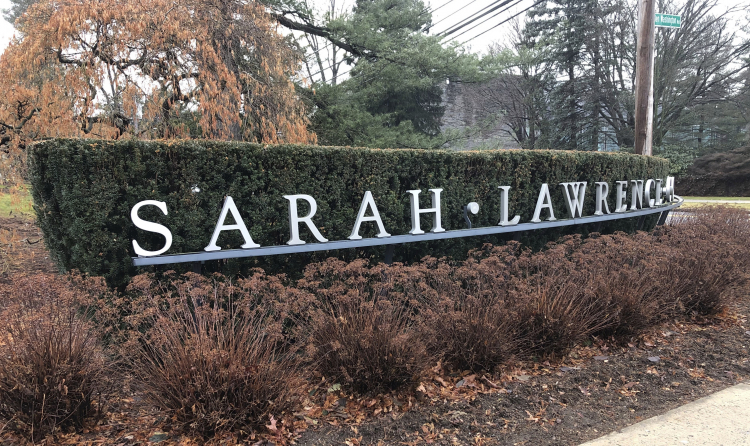
The president of Sarah Lawrence College, Cristle Collins Judd, recently posted a photograph of her Harvard faculty badge to Instagram and LinkedIn, noting that it was her third year serving on the faculty of the Harvard Graduate School of Education’s Seminar for New Presidents. It was the sort of cheerful, unremarkable post that college presidents share all the time. I have taught at Sarah Lawrence for nearly two decades and I saw something else. The story is not the social media post - it was Harvard's decision to keep inviting Judd back to help prepare the next generation of college presidents.
Founded in 1990 by Judith Block McLaughlin, the seminar has shaped more than 1,500 presidents through a multi-day, $10,350 immersion in the practical work of the office, held in confidence so that new presidents can speak candidly. But it does not only teach presidents, the seminar confers prestige and signals who the profession considers worthy of emulation. Like every guild, it communicates through whom it elevates as much as through what it covers. New presidents need candid counsel and community for what has become a challenging job, and that is exactly why the seminar’s judgment about who should model it matters. Only a handful of sitting and former presidents are invited to teach. Cristle Judd is one of them.
Some history is important here. In December 2024, the Department of Education opened a Title VI investigation into Sarah Lawrence while Judd was president. Three months later, the House Committee on Education and the Workforce named the College one of five institutions under investigation for failures in addressing campus antisemitism, in letters sent directly to Judd and her board chair. The Committee’s June 11 follow-up letter described a Jewish student who received threatening messages from members of the campus Students for Justice in Palestine chapter - one told him he “should have been killed in Israel” - and who ultimately left the school. It also described a boycott campaign against a Jewish professor – in this case, me - over his support for Israel’s right to defend itself. I reported the campaign when it began, in August 2024, and received no direct response from the president.
The president of Hillel International has said the climate for Jewish students at Sarah Lawrence is “among the worst we’ve seen.”
Judd’s own public communications proceeded as if none of it were happening. In a May 2025 letter to the community, Judd laid out her summer: the collective work of the AAC&U’s “Call for Constructive Engagement,” which she noted she had signed along with more than 650 others, and “the privilege of mentoring new presidents” as a faculty member of the Harvard seminar, to which she supplied a link.
Eight months later, in January of 2026, the country watched that engagement in practice. When liberal New York Times columnist Ezra Klein came to campus for a conversation billed as bridge-building, masked protesters confronted attendees with a banner reading “Nazi Normalizer” and chanted that the College protects “Zionist Jews.” The day before, on Holocaust Remembrance Day, an antisemitic slur – Zionist pig - had been painted across a campus free-expression board.
None of it was unforeseeable, as I wrote at the time: the college had permitted a faculty-sponsored counter-event branding Klein a “genocide denier.” Klein invited the protesters to stay and make their case; they walked out instead. Judd did not intervene or pause the event. When the disruptors left on their own, she turned to Klein and quipped, “Welcome to Sarah Lawrence College.” The clip went viral.
In public, the tone was lighter. The next day, on her official Instagram, Judd pronounced the evening lively and thought-provoking, then turned off the comments, which is not her habit. Her campus-wide email was more forthright: it named the slur antisemitic, acknowledged that the disruption created an atmosphere of intimidation, stated clearly and plainly that such conduct interfered with the audience’s ability to hear and engage with the speaker, and referred the disruption to the conduct process. That was as direct as she got and no official public disciplinary outcome was ever announced.
When the Congressional Committee released its full report on antisemitism in March of 2026, appending hundreds of pages of the college’s own internal emails, Judd wrote to faculty and staff the following evening. The email stressed that the college had engaged in good faith and within the law, and described the preceding two and a half years as “a challenging time for campuses across the country.” It named no student and acknowledged no incident, and the word antisemitism appeared only in its description of the Committee’s inquiry. The public statement on the College’s website said much the same. Careful words for internal audiences, a smooth gloss for public ones, and no publicly known consequences followed.
The calendar tells the story. Judd wrote about her privilege of mentoring new presidents at Harvard on May 20 of 2025. By the time the seminar convened in July, the Committee’s June 11, 2025, follow-up letter to Sarah Lawrence was already public.
Judd went back again this summer, in 2026, just four months after the full Congressional committee report landed and six months after the video from the Klein event made its way around the country. The Klein event and the Congressional report made national news and while Harvard did not create that record, Harvard nevertheless invited Judd back to the seminar faculty.
It is worth noting that beneath her announcement of returning to Harvard for a third year in a row, a leadership consultant left a congratulatory comment. It captures exactly what repeated invitations signify: “This is impressive Cristle — third year back on faculty for this seminar says as much as the seminar itself. HGSE doesn't invite people to keep shaping how new presidents think about the job unless the first two years clearly landed.” He meant it warmly. He is right about how this seminar works, which is exactly why we should worry.
Certainly, teaching as a guest faculty member in a Harvard program is not an endorsement of everything a president has done, and nobody is asking Harvard to endorse everything. The question is narrower. Is there any public record - a federal civil rights investigation, congressional scrutiny sustained across a year, a widely circulated video of a president shrugging at a shout-down - that would give this profession pause? There is no shortage of presidents who could teach this seminar. Yet Harvard invited Judd to serve on the seminar faculty for three consecutive years.
Since October 7, presidents responding to antisemitism on their own campuses have produced statements that are nearly interchangeable: vetted language, the phrase about challenging times, an appeal to institutional values, and a careful refusal to say what happened or to whom. Judd's answer to the Congressional Committee reads like all the others; a profession that keeps rewarding empty statements like hers with Harvard invitations will keep producing them.
Sarah Lawrence had its own chances here. For months I asked for something small: that the College apply the rules it already has. As a faculty member, I have no official knowledge of what came of any of these student disruptions and behaviors before Klein. No public disciplinary outcome was ever announced regarding the protesters at the Klein event either. What I do know, however, is that the Sarah Lawrence board in June of this year gave Judd a third term, praising her “calmness, wisdom, integrity, humanity, and humility,” and the president of AAC&U added her congratulations. Weeks later Judd was back at Harvard.
Sarah Lawrence’s trustees made their choice and the College’s reputation, in my view, has suffered. Harvard’s responsibility reaches further because a college hires one president, while this seminar helps shape dozens every summer. Nothing in the public record discussed here is difficult to find over these past few years. But until the profession treats a record like Judd’s as a warning rather than a credential, we should expect what we have been getting: statements that never name the victim, equivocation where clarity is called for, and presidents who all sound like they trained somewhere together.
